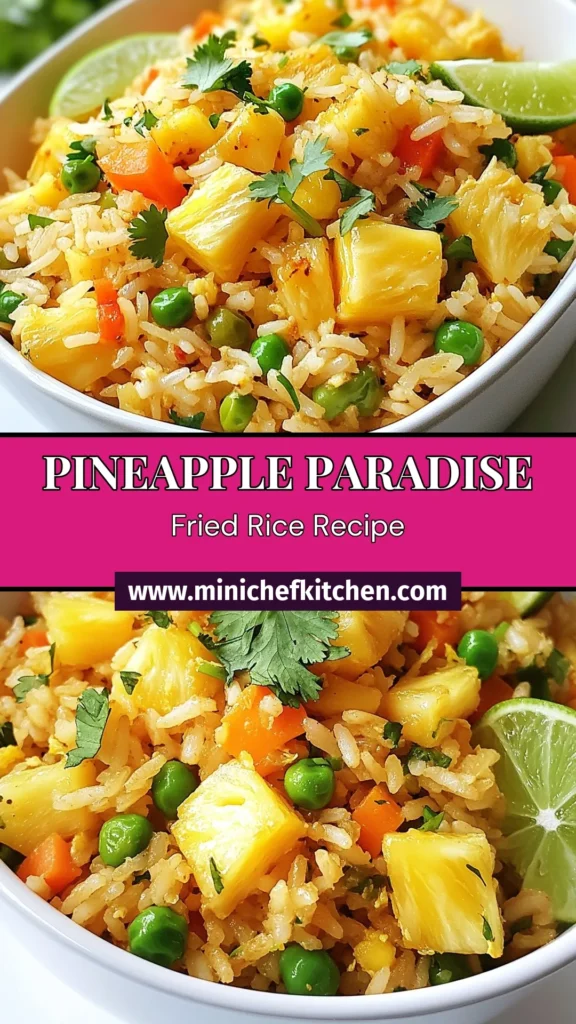
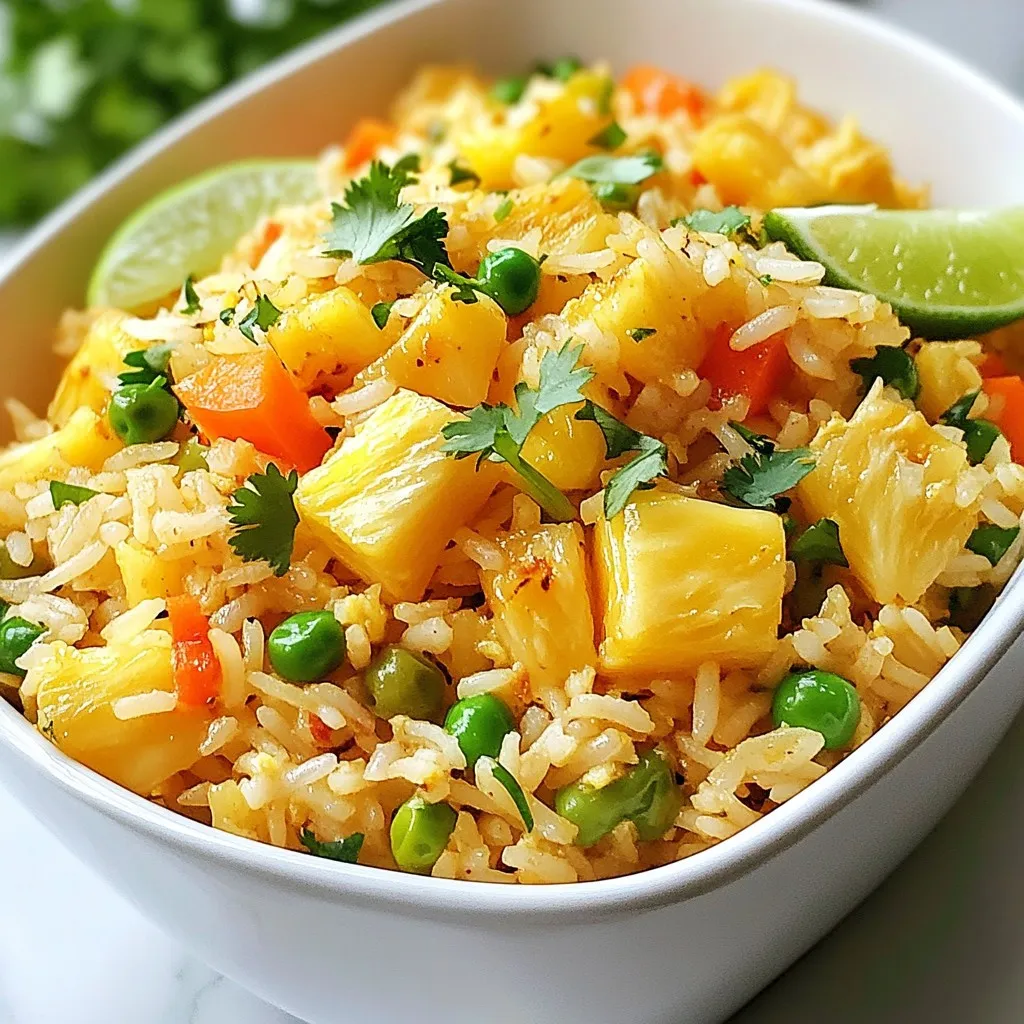
Thai Pineapple Fried Rice Flavorful and Easy Recipe

WANT TO SAVE THIS RECIPE?

If you’re craving a dish that’s both sweet and savory, look no further. Thai Pineapple Fried Rice is easy to make and packed with flavor. I’ll guide you through fresh ingredients, simple steps, and delicious variations. Whether you want to impress guests or whip up a quick meal, this recipe will brighten your dinner table. Let’s dive into making this tasty dish that will leave everyone wanting more!
- 2 cups jasmine rice, cooked and cooled - 1 cup fresh pineapple, diced into small chunks - 1 medium onion, diced - 2 cloves garlic, finely minced - 1 red bell pepper, diced into bite-sized pieces - 1 cup peas and carrots (can use fresh or frozen) - 3 green onions, finely chopped - 2 tablespoons soy sauce (or tamari for a gluten-free option) - 1 tablespoon fish sauce (optional, for depth of flavor) - 2 tablespoons vegetable oil - 1 tablespoon curry powder - Salt and black pepper to taste - Fresh cilantro leaves for garnish (optional) - Lime wedges for serving If you don’t have jasmine rice, you can use long-grain rice. It works well too. For the pineapple, canned pineapple can be a quick fix, but fresh is best for taste. If you prefer not to use fish sauce, just skip it. The dish will still be tasty! You can also swap out the vegetables based on what you have at home. Broccoli, corn, or snap peas can work great. Using fresh ingredients makes a big difference in flavor. Fresh pineapple adds a sweet touch that canned cannot match. Fresh vegetables bring crunch and color. They also have more nutrients. When you use fresh herbs like cilantro, they give a bright finish to the dish. Always choose the best ingredients you can find for a dish this special. {{ingredient_image_2}} First, gather all your ingredients. You will need fresh onion, garlic, red bell pepper, peas, and carrots. Chop the onion finely. Mince the garlic into small pieces. Dice the red bell pepper into bite-sized parts. If you use frozen peas and carrots, you can skip chopping. Having all your veggies ready makes cooking easier. Heat vegetable oil in a large skillet over medium heat. Once hot, add the diced onion. Cook the onion for about three minutes. It should turn soft and clear. Next, add the minced garlic and diced red bell pepper. Stir for two minutes until the bell pepper softens. Sprinkle in curry powder and mix for 30 seconds. This helps the spice bloom. Now, add the cooled jasmine rice. Break up any clumps with a spatula. It should mix well with the veggies. Push the rice to one side of the skillet. Add the diced pineapple and peas and carrots to the other side. Cook for two to three minutes. This allows the pineapple to caramelize and brings out its sweetness. Stir the pineapple and vegetables into the rice. Drizzle soy sauce and fish sauce over the mixture. Mix well to coat all ingredients. Season with salt and black pepper to your taste. Finally, fold in chopped green onions and stir for another minute. This helps all the flavors blend beautifully. Remove the skillet from heat and transfer the fried rice to a serving bowl. If you want, you can garnish with fresh cilantro leaves for added color. Serve with lime wedges on the side. Squeezing lime juice enhances the dish's flavor. Enjoy your vibrant Thai pineapple fried rice! To make authentic Thai fried rice, start with jasmine rice. This rice has a great aroma and a fluffy texture. Use cooked and cooled rice for the best results. If you can, make the rice a day before. This helps it dry out a bit, making it less sticky during cooking. Next, use fresh pineapple. The sweetness of the fruit balances the savory flavors. Cut it into small chunks so it mixes well with the rice. Use a mix of colorful veggies, like red bell pepper and green onions, for a vibrant look. When cooking, keep your heat at medium-high. This helps to fry the rice quickly. Stir it often to prevent sticking. Adding curry powder gives the dish its unique flavor. Make sure to add it after the onion and garlic. Let the spices cook to bring out their taste. One common mistake is using wet rice. Wet rice clumps together, which makes it hard to fry. Always use cooled rice. Another mistake is overcooking the vegetables. You want them tender but still crisp. Cook them just until soft. Don't forget to season well. A pinch of salt and some pepper can make a big difference. Also, be careful with soy sauce. Too much can make the dish too salty. Start with a small amount, and taste as you go. You can enhance flavor in many ways. Adding nuts, like cashews, gives a crunchy texture. You could also toss in fresh herbs like basil for a fragrant touch. If you want more spice, add chopped chili peppers. For a protein boost, mix in cooked shrimp or chicken. Fish sauce adds depth to the dish, but it is optional. If you don’t like the taste, skip it. Instead, add more soy sauce or some lime juice. Lime juice brightens the flavors and makes the dish more refreshing. Remember, cooking is about exploring flavors. Try different ingredients to find your favorite mix! Pro Tips Use Day-Old Rice: For the best texture, use rice that has been cooked and cooled beforehand, ideally overnight. This helps prevent the rice from becoming mushy during frying. Customize Your Veggies: Feel free to swap in your favorite vegetables such as bell peppers, broccoli, or snap peas to make the dish your own. Enhance the Flavor: For an added depth of flavor, consider adding a splash of coconut milk or a sprinkle of crushed red pepper flakes for heat. Fresh Herbs Matter: Garnishing with fresh cilantro or basil just before serving elevates the dish and adds a burst of freshness! {{image_4}} You can easily make this dish vegetarian or vegan. Just skip the fish sauce. Use only soy sauce or tamari for a gluten-free option. Add extra veggies like bell peppers, zucchini, or mushrooms. These ingredients boost flavor and texture. A sprinkle of crushed peanuts adds a nice crunch. For added protein, try chicken, shrimp, or tofu. If using chicken, cut it into small pieces. Cook it first in the skillet until golden brown. Then, remove it and set it aside. Add it back at the end with the rice. For shrimp, just sauté until they turn pink. If you want tofu, use firm tofu and cube it. Cook it until it's crispy for the best texture. Adjust the spice level to your taste. For a mild dish, use less curry powder. If you love heat, add chili flakes or fresh peppers. You can also try different spices. Add ginger for warmth or lime zest for brightness. Experiment with flavors to create your unique fried rice. After making Thai pineapple fried rice, let it cool first. Once cool, store it in an airtight container. This keeps the rice fresh and tasty. Make sure to use a container that seals well. I recommend using glass or BPA-free plastic containers. Label your storage container with the date. This helps you know how long it has been in the fridge. When you're ready to enjoy the fried rice again, reheat it in a skillet or a microwave. If using a skillet, add a splash of water or oil. Heat it over medium heat and stir often. This helps to keep the rice moist. If using a microwave, place the rice in a bowl, cover it, and heat in short bursts. Stir in between bursts to ensure even heating. Thai pineapple fried rice lasts about 3 to 4 days in the fridge. If you want to keep it longer, freeze it! To freeze, place the cooled fried rice in a freezer-safe bag. Make sure to remove as much air as possible. It can last up to 3 months in the freezer. When you're ready to eat, thaw it in the fridge overnight before reheating. Yes, you can use brown rice. Brown rice has a nutty taste and more fiber. It cooks longer than jasmine rice. Make sure to adjust the water and cooking time. The dish will still be tasty and healthy. Thai Pineapple Fried Rice works well with many sides. You can pair it with: - Thai spring rolls - Grilled chicken or shrimp - A fresh green salad - Thai sweet chili sauce for dipping These sides add variety and balance to your meal. To make Thai Pineapple Fried Rice gluten-free, use tamari instead of soy sauce. Tamari is a gluten-free soy sauce. Ensure all other ingredients like curry powder are also gluten-free. This way, you can enjoy the dish without worry! To make great Thai fried rice, you need fresh ingredients and clear steps. We covered key ingredients, cooking techniques, and tips for authentic taste. Avoid common mistakes and explore variations to fit your diet. Storing and reheating rice properly keeps it tasty for later. Whether you’re a beginner or an expert, this guide helps you master the dish. Enjoy creating your own perfect bowl of fried rice!

Why I Love This Recipe

  1. Fresh and Fruity: This dish combines the sweetness of pineapple with savory ingredients, creating a delightful balance of flavors.
  2. Quick and Easy: With just 30 minutes of total time, this recipe is perfect for a weeknight dinner or a last-minute gathering.
  3. Customize to Your Taste: You can easily add your favorite proteins or vegetables, making it a versatile meal option.
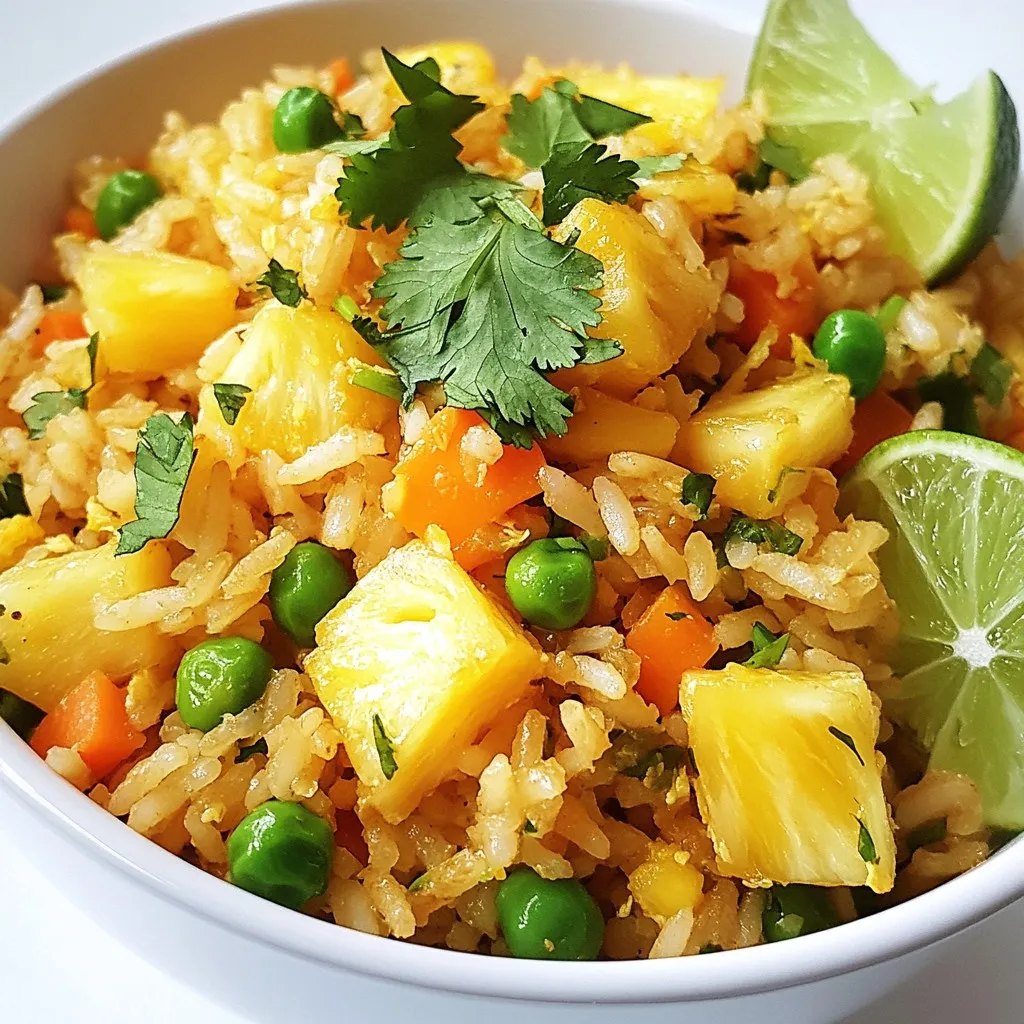
  4. Colorful Presentation: The vibrant colors of the vegetables and pineapple make this dish not only tasty but visually appealing as well.

Ingredients

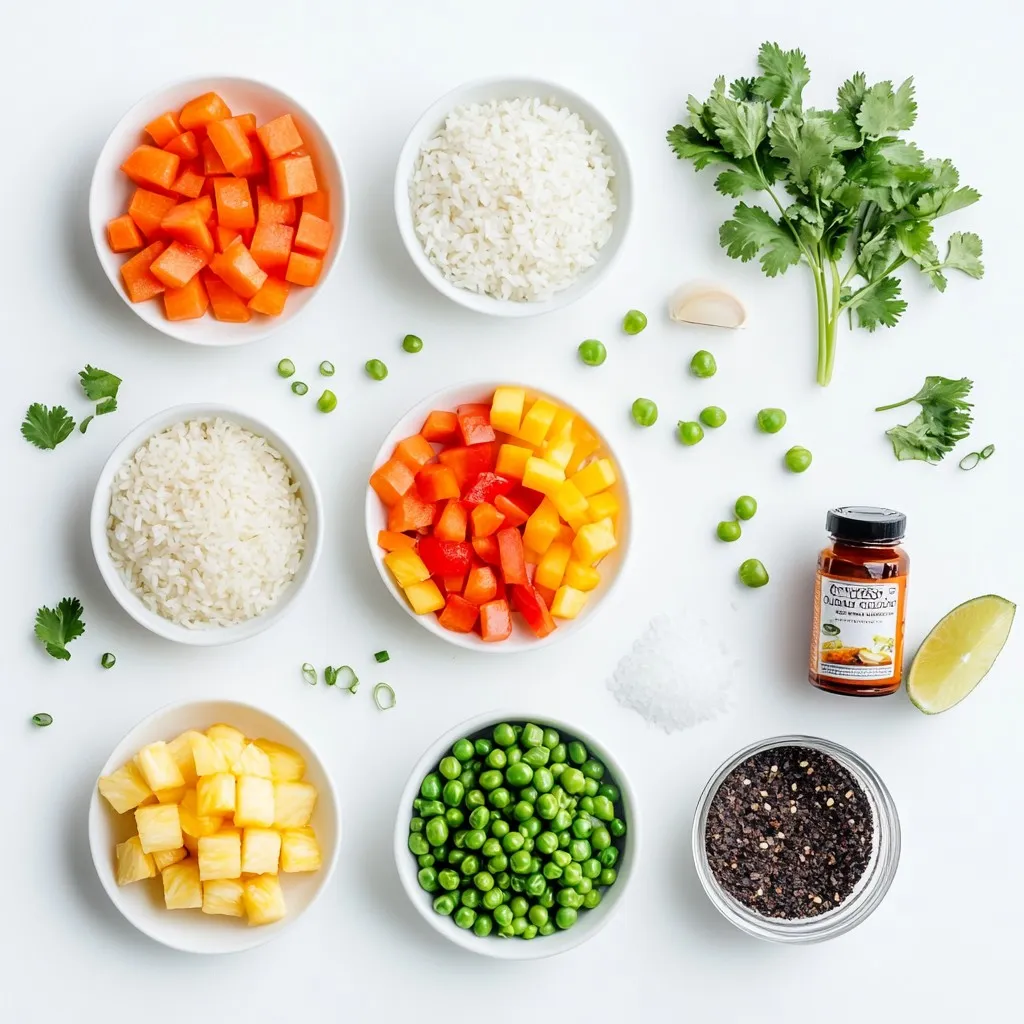
List of Ingredients

– 2 cups jasmine rice, cooked and cooled

– 1 cup fresh pineapple, diced into small chunks

– 1 medium onion, diced

– 2 cloves garlic, finely minced

– 1 red bell pepper, diced into bite-sized pieces

– 1 cup peas and carrots (can use fresh or frozen)

– 3 green onions, finely chopped

– 2 tablespoons soy sauce (or tamari for a gluten-free option)

– 1 tablespoon fish sauce (optional, for depth of flavor)

– 2 tablespoons vegetable oil

– 1 tablespoon curry powder

– Salt and black pepper to taste

– Fresh cilantro leaves for garnish (optional)

– Lime wedges for serving

Ingredient Substitutions

If you don’t have jasmine rice, you can use long-grain rice. It works well too. For the pineapple, canned pineapple can be a quick fix, but fresh is best for taste. If you prefer not to use fish sauce, just skip it. The dish will still be tasty! You can also swap out the vegetables based on what you have at home. Broccoli, corn, or snap peas can work great.

Importance of Fresh Ingredients

Using fresh ingredients makes a big difference in flavor. Fresh pineapple adds a sweet touch that canned cannot match. Fresh vegetables bring crunch and color. They also have more nutrients. When you use fresh herbs like cilantro, they give a bright finish to the dish. Always choose the best ingredients you can find for a dish this special.
Step-by-Step Instructions

Preparing the Vegetables

First, gather all your ingredients. You will need fresh onion, garlic, red bell pepper, peas, and carrots. Chop the onion finely. Mince the garlic into small pieces. Dice the red bell pepper into bite-sized parts. If you use frozen peas and carrots, you can skip chopping. Having all your veggies ready makes cooking easier.

Cooking Techniques for Perfect Fried Rice

Heat vegetable oil in a large skillet over medium heat. Once hot, add the diced onion. Cook the onion for about three minutes. It should turn soft and clear. Next, add the minced garlic and diced red bell pepper. Stir for two minutes until the bell pepper softens. Sprinkle in curry powder and mix for 30 seconds. This helps the spice bloom.

Now, add the cooled jasmine rice. Break up any clumps with a spatula. It should mix well with the veggies. Push the rice to one side of the skillet. Add the diced pineapple and peas and carrots to the other side. Cook for two to three minutes. This allows the pineapple to caramelize and brings out its sweetness.

Final Mixing and Serving Tips

Stir the pineapple and vegetables into the rice. Drizzle soy sauce and fish sauce over the mixture. Mix well to coat all ingredients. Season with salt and black pepper to your taste. Finally, fold in chopped green onions and stir for another minute. This helps all the flavors blend beautifully.

Remove the skillet from heat and transfer the fried rice to a serving bowl. If you want, you can garnish with fresh cilantro leaves for added color. Serve with lime wedges on the side. Squeezing lime juice enhances the dish’s flavor. Enjoy your vibrant Thai pineapple fried rice!

Tips & Tricks

How to Make Authentic Thai Fried Rice

To make authentic Thai fried rice, start with jasmine rice. This rice has a great aroma and a fluffy texture. Use cooked and cooled rice for the best results. If you can, make the rice a day before. This helps it dry out a bit, making it less sticky during cooking.

Next, use fresh pineapple. The sweetness of the fruit balances the savory flavors. Cut it into small chunks so it mixes well with the rice. Use a mix of colorful veggies, like red bell pepper and green onions, for a vibrant look.

When cooking, keep your heat at medium-high. This helps to fry the rice quickly. Stir it often to prevent sticking. Adding curry powder gives the dish its unique flavor. Make sure to add it after the onion and garlic. Let the spices cook to bring out their taste.

Common Mistakes to Avoid

One common mistake is using wet rice. Wet rice clumps together, which makes it hard to fry. Always use cooled rice. Another mistake is overcooking the vegetables. You want them tender but still crisp. Cook them just until soft.

Don’t forget to season well. A pinch of salt and some pepper can make a big difference. Also, be careful with soy sauce. Too much can make the dish too salty. Start with a small amount, and taste as you go.

Enhancing Flavor with Additional Ingredients

You can enhance flavor in many ways. Adding nuts, like cashews, gives a crunchy texture. You could also toss in fresh herbs like basil for a fragrant touch. If you want more spice, add chopped chili peppers. For a protein boost, mix in cooked shrimp or chicken.

Fish sauce adds depth to the dish, but it is optional. If you don’t like the taste, skip it. Instead, add more soy sauce or some lime juice. Lime juice brightens the flavors and makes the dish more refreshing.

Remember, cooking is about exploring flavors. Try different ingredients to find your favorite mix!

Pro Tips

  1. Use Day-Old Rice: For the best texture, use rice that has been cooked and cooled beforehand, ideally overnight. This helps prevent the rice from becoming mushy during frying.
  2. Customize Your Veggies: Feel free to swap in your favorite vegetables such as bell peppers, broccoli, or snap peas to make the dish your own.
  3. Enhance the Flavor: For an added depth of flavor, consider adding a splash of coconut milk or a sprinkle of crushed red pepper flakes for heat.
  4. Fresh Herbs Matter: Garnishing with fresh cilantro or basil just before serving elevates the dish and adds a burst of freshness!
Variations

Vegetarian and Vegan Options

You can easily make this dish vegetarian or vegan. Just skip the fish sauce. Use only soy sauce or tamari for a gluten-free option. Add extra veggies like bell peppers, zucchini, or mushrooms. These ingredients boost flavor and texture. A sprinkle of crushed peanuts adds a nice crunch.

Protein Add-ins (like chicken, shrimp, or tofu)

For added protein, try chicken, shrimp, or tofu. If using chicken, cut it into small pieces. Cook it first in the skillet until golden brown. Then, remove it and set it aside. Add it back at the end with the rice. For shrimp, just sauté until they turn pink. If you want tofu, use firm tofu and cube it. Cook it until it’s crispy for the best texture.

Different Spice Levels and Flavor Profiles

Adjust the spice level to your taste. For a mild dish, use less curry powder. If you love heat, add chili flakes or fresh peppers. You can also try different spices. Add ginger for warmth or lime zest for brightness. Experiment with flavors to create your unique fried rice.

Storage Info

Proper Storage Techniques

After making Thai pineapple fried rice, let it cool first. Once cool, store it in an airtight container. This keeps the rice fresh and tasty. Make sure to use a container that seals well. I recommend using glass or BPA-free plastic containers. Label your storage container with the date. This helps you know how long it has been in the fridge.

Reheating Instructions

When you’re ready to enjoy the fried rice again, reheat it in a skillet or a microwave. If using a skillet, add a splash of water or oil. Heat it over medium heat and stir often. This helps to keep the rice moist. If using a microwave, place the rice in a bowl, cover it, and heat in short bursts. Stir in between bursts to ensure even heating.

Shelf Life and Freezing Tips

Thai pineapple fried rice lasts about 3 to 4 days in the fridge. If you want to keep it longer, freeze it! To freeze, place the cooled fried rice in a freezer-safe bag. Make sure to remove as much air as possible. It can last up to 3 months in the freezer. When you’re ready to eat, thaw it in the fridge overnight before reheating.

FAQs

Can I use brown rice instead of jasmine rice?

Yes, you can use brown rice. Brown rice has a nutty taste and more fiber. It cooks longer than jasmine rice. Make sure to adjust the water and cooking time. The dish will still be tasty and healthy.

What can I serve with Thai Pineapple Fried Rice?

Thai Pineapple Fried Rice works well with many sides. You can pair it with:

– Thai spring rolls

– Grilled chicken or shrimp

– A fresh green salad

– Thai sweet chili sauce for dipping

These sides add variety and balance to your meal.

How do I make this dish gluten-free?

To make Thai Pineapple Fried Rice gluten-free, use tamari instead of soy sauce. Tamari is a gluten-free soy sauce. Ensure all other ingredients like curry powder are also gluten-free. This way, you can enjoy the dish without worry!

To make great Thai fried rice, you need fresh ingredients and clear steps. We covered key ingredients, cooking techniques, and tips for authentic taste. Avoid common mistakes and explore variations to fit your diet. Storing and reheating rice properly keeps it tasty for later. Whether you’re a beginner or an expert, this guide helps you master the dish. Enjoy creating your own perfect bowl of fried ric

- 2 cups jasmine rice, cooked and cooled - 1 cup fresh pineapple, diced into small chunks - 1 medium onion, diced - 2 cloves garlic, finely minced - 1 red bell pepper, diced into bite-sized pieces - 1 cup peas and carrots (can use fresh or frozen) - 3 green onions, finely chopped - 2 tablespoons soy sauce (or tamari for a gluten-free option) - 1 tablespoon fish sauce (optional, for depth of flavor) - 2 tablespoons vegetable oil - 1 tablespoon curry powder - Salt and black pepper to taste - Fresh cilantro leaves for garnish (optional) - Lime wedges for serving If you don’t have jasmine rice, you can use long-grain rice. It works well too. For the pineapple, canned pineapple can be a quick fix, but fresh is best for taste. If you prefer not to use fish sauce, just skip it. The dish will still be tasty! You can also swap out the vegetables based on what you have at home. Broccoli, corn, or snap peas can work great. Using fresh ingredients makes a big difference in flavor. Fresh pineapple adds a sweet touch that canned cannot match. Fresh vegetables bring crunch and color. They also have more nutrients. When you use fresh herbs like cilantro, they give a bright finish to the dish. Always choose the best ingredients you can find for a dish this special. {{ingredient_image_2}} First, gather all your ingredients. You will need fresh onion, garlic, red bell pepper, peas, and carrots. Chop the onion finely. Mince the garlic into small pieces. Dice the red bell pepper into bite-sized parts. If you use frozen peas and carrots, you can skip chopping. Having all your veggies ready makes cooking easier. Heat vegetable oil in a large skillet over medium heat. Once hot, add the diced onion. Cook the onion for about three minutes. It should turn soft and clear. Next, add the minced garlic and diced red bell pepper. Stir for two minutes until the bell pepper softens. Sprinkle in curry powder and mix for 30 seconds. This helps the spice bloom. Now, add the cooled jasmine rice. Break up any clumps with a spatula. It should mix well with the veggies. Push the rice to one side of the skillet. Add the diced pineapple and peas and carrots to the other side. Cook for two to three minutes. This allows the pineapple to caramelize and brings out its sweetness. Stir the pineapple and vegetables into the rice. Drizzle soy sauce and fish sauce over the mixture. Mix well to coat all ingredients. Season with salt and black pepper to your taste. Finally, fold in chopped green onions and stir for another minute. This helps all the flavors blend beautifully. Remove the skillet from heat and transfer the fried rice to a serving bowl. If you want, you can garnish with fresh cilantro leaves for added color. Serve with lime wedges on the side. Squeezing lime juice enhances the dish's flavor. Enjoy your vibrant Thai pineapple fried rice! To make authentic Thai fried rice, start with jasmine rice. This rice has a great aroma and a fluffy texture. Use cooked and cooled rice for the best results. If you can, make the rice a day before. This helps it dry out a bit, making it less sticky during cooking. Next, use fresh pineapple. The sweetness of the fruit balances the savory flavors. Cut it into small chunks so it mixes well with the rice. Use a mix of colorful veggies, like red bell pepper and green onions, for a vibrant look. When cooking, keep your heat at medium-high. This helps to fry the rice quickly. Stir it often to prevent sticking. Adding curry powder gives the dish its unique flavor. Make sure to add it after the onion and garlic. Let the spices cook to bring out their taste. One common mistake is using wet rice. Wet rice clumps together, which makes it hard to fry. Always use cooled rice. Another mistake is overcooking the vegetables. You want them tender but still crisp. Cook them just until soft. Don't forget to season well. A pinch of salt and some pepper can make a big difference. Also, be careful with soy sauce. Too much can make the dish too salty. Start with a small amount, and taste as you go. You can enhance flavor in many ways. Adding nuts, like cashews, gives a crunchy texture. You could also toss in fresh herbs like basil for a fragrant touch. If you want more spice, add chopped chili peppers. For a protein boost, mix in cooked shrimp or chicken. Fish sauce adds depth to the dish, but it is optional. If you don’t like the taste, skip it. Instead, add more soy sauce or some lime juice. Lime juice brightens the flavors and makes the dish more refreshing. Remember, cooking is about exploring flavors. Try different ingredients to find your favorite mix! Pro Tips Use Day-Old Rice: For the best texture, use rice that has been cooked and cooled beforehand, ideally overnight. This helps prevent the rice from becoming mushy during frying. Customize Your Veggies: Feel free to swap in your favorite vegetables such as bell peppers, broccoli, or snap peas to make the dish your own. Enhance the Flavor: For an added depth of flavor, consider adding a splash of coconut milk or a sprinkle of crushed red pepper flakes for heat. Fresh Herbs Matter: Garnishing with fresh cilantro or basil just before serving elevates the dish and adds a burst of freshness! {{image_4}} You can easily make this dish vegetarian or vegan. Just skip the fish sauce. Use only soy sauce or tamari for a gluten-free option. Add extra veggies like bell peppers, zucchini, or mushrooms. These ingredients boost flavor and texture. A sprinkle of crushed peanuts adds a nice crunch. For added protein, try chicken, shrimp, or tofu. If using chicken, cut it into small pieces. Cook it first in the skillet until golden brown. Then, remove it and set it aside. Add it back at the end with the rice. For shrimp, just sauté until they turn pink. If you want tofu, use firm tofu and cube it. Cook it until it's crispy for the best texture. Adjust the spice level to your taste. For a mild dish, use less curry powder. If you love heat, add chili flakes or fresh peppers. You can also try different spices. Add ginger for warmth or lime zest for brightness. Experiment with flavors to create your unique fried rice. After making Thai pineapple fried rice, let it cool first. Once cool, store it in an airtight container. This keeps the rice fresh and tasty. Make sure to use a container that seals well. I recommend using glass or BPA-free plastic containers. Label your storage container with the date. This helps you know how long it has been in the fridge. When you're ready to enjoy the fried rice again, reheat it in a skillet or a microwave. If using a skillet, add a splash of water or oil. Heat it over medium heat and stir often. This helps to keep the rice moist. If using a microwave, place the rice in a bowl, cover it, and heat in short bursts. Stir in between bursts to ensure even heating. Thai pineapple fried rice lasts about 3 to 4 days in the fridge. If you want to keep it longer, freeze it! To freeze, place the cooled fried rice in a freezer-safe bag. Make sure to remove as much air as possible. It can last up to 3 months in the freezer. When you're ready to eat, thaw it in the fridge overnight before reheating. Yes, you can use brown rice. Brown rice has a nutty taste and more fiber. It cooks longer than jasmine rice. Make sure to adjust the water and cooking time. The dish will still be tasty and healthy. Thai Pineapple Fried Rice works well with many sides. You can pair it with: - Thai spring rolls - Grilled chicken or shrimp - A fresh green salad - Thai sweet chili sauce for dipping These sides add variety and balance to your meal. To make Thai Pineapple Fried Rice gluten-free, use tamari instead of soy sauce. Tamari is a gluten-free soy sauce. Ensure all other ingredients like curry powder are also gluten-free. This way, you can enjoy the dish without worry! To make great Thai fried rice, you need fresh ingredients and clear steps. We covered key ingredients, cooking techniques, and tips for authentic taste. Avoid common mistakes and explore variations to fit your diet. Storing and reheating rice properly keeps it tasty for later. Whether you’re a beginner or an expert, this guide helps you master the dish. Enjoy creating your own perfect bowl of fried rice!

Tropical Thai Pineapple Fried Rice

A delicious and vibrant fried rice dish featuring jasmine rice, fresh pineapple, and a medley of vegetables, perfect for a tropical twist.
Prep Time 15 minutes
Cook Time 15 minutes
Total Time 30 minutes
Course Main Course
Cuisine Thai
Servings 4
Calories 350 kcal

Ingredients
  

  • 2 cups jasmine rice, cooked and cooled
  • 1 cup fresh pineapple, diced into small chunks
  • 1 medium onion, diced
  • 2 cloves garlic, finely minced
  • 1 medium red bell pepper, diced into bite-sized pieces
  • 1 cup peas and carrots (can use fresh or frozen)
  • 3 stalks green onions, finely chopped
  • 2 tablespoons soy sauce (or tamari for a gluten-free option)
  • 1 tablespoon fish sauce (optional, for depth of flavor)
  • 2 tablespoons vegetable oil
  • 1 tablespoon curry powder
  • to taste salt and black pepper
  • for garnish fresh cilantro leaves (optional)
  • for serving lime wedges

Instructions
 

  • In a large skillet or wok, heat the vegetable oil over medium heat. Once hot, add the diced onion and sauté for about 3 minutes until it becomes translucent and soft.
  • Incorporate the minced garlic and diced red bell pepper into the skillet, cooking for an additional 2 minutes or until the bell pepper has softened slightly.
  • Sprinkle the curry powder into the skillet, stirring well to coat the vegetables. Cook for about 30 seconds to allow the spices to become fragrant.
  • Gently add the cooled jasmine rice to the pan, breaking up any clumps with a spatula. Mix thoroughly to ensure the rice is well combined with the sautéed vegetables.
  • Push the rice mixture to one side of the skillet, then add the diced pineapple and the peas and carrots to the other side. Sauté everything for 2-3 minutes until heated through and the pineapple starts to caramelize slightly.
  • Stir the pineapple and vegetables into the rice mixture. Drizzle the soy sauce and fish sauce (if using) evenly over the rice, mixing well to ensure all ingredients are combined and coated in sauce.
  • Add salt and pepper according to your preference. Fold in the chopped green onions, continuing to stir for an additional minute to enable flavors to meld.
  • Remove the skillet from the heat and carefully transfer the fried rice to a serving bowl.
  • Optional: Garnish with fresh cilantro leaves for a pop of color and flavor. Serve with lime wedges on the side, allowing each person to squeeze fresh lime juice over their portion for a zesty finish.

Notes

Optional fish sauce adds depth of flavor; serve with lime wedges for a zesty finish.
Keyword fried rice, pineapple, Thai cuisine, vegetarian

WANT TO SAVE THIS RECIPE?