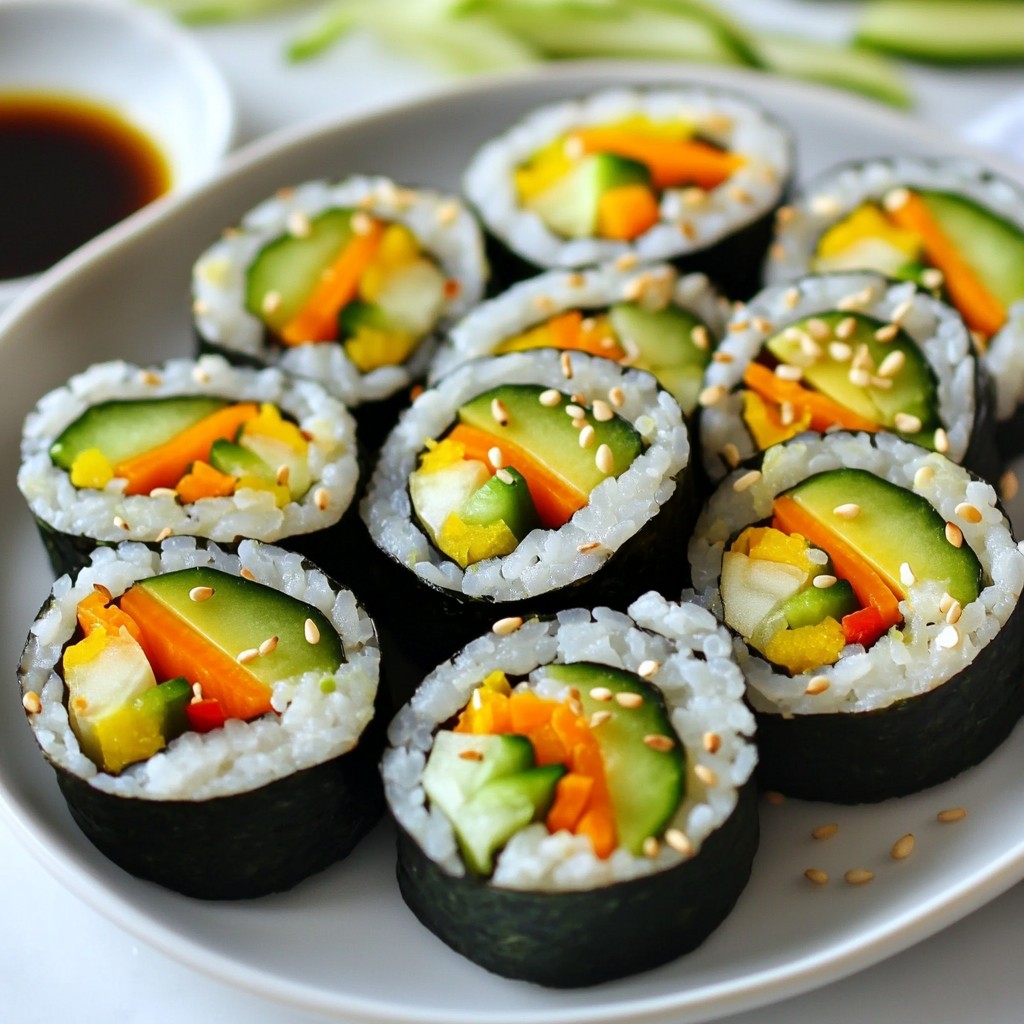
Are you ready to dive into the fresh world of homemade sushi? My recipe for Avocado Veggie Sushi Rolls is simple and packed with flavor. You can make this dish in just a few steps, using common ingredients you probably have at home. Say goodbye to takeout and hello to a fun, tasty meal that you will love making. Let’s roll into this delicious, healthy recipe!
Why I Love This Recipe
- Fresh and Healthy: This recipe is packed with fresh vegetables and creamy avocado, making it a nutritious choice for a light meal or snack.
- Customizable: You can easily swap out vegetables based on your preferences or what you have on hand, making it versatile for any palate.
- Fun to Make: Rolling sushi can be a fun activity to do with friends or family, allowing everyone to get creative with their fillings.
- Beautiful Presentation: The vibrant colors of the vegetables combined with the sushi rolls create an eye-catching dish that's perfect for entertaining.
Ingredients
Main Ingredients for Avocado Veggie Sushi Rolls
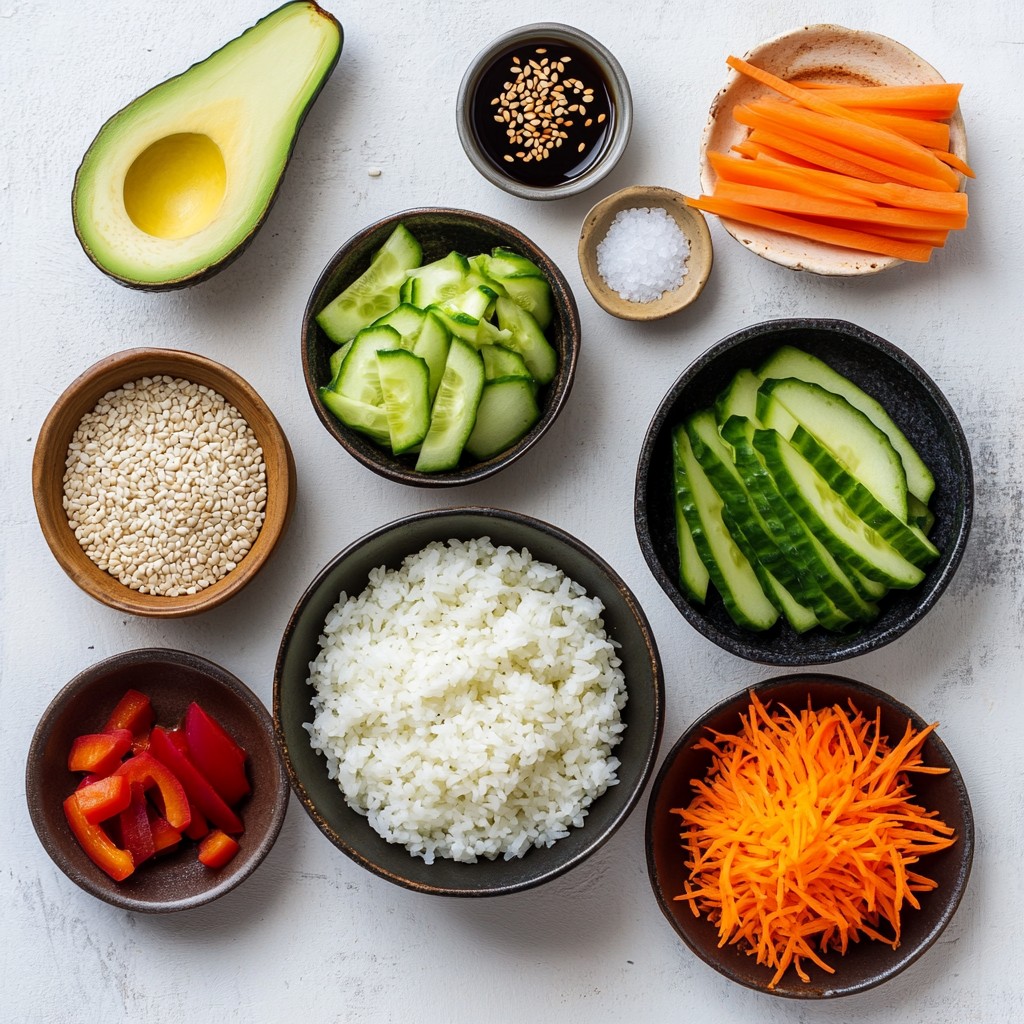
To make these tasty sushi rolls, gather these fresh ingredients:
- 2 cups sushi rice
- 2 1/2 cups water
- 1/4 cup rice vinegar
- 2 tablespoons granulated sugar
- 1 teaspoon sea salt
- 4 sheets of nori (seaweed)
- 1 ripe avocado, sliced into thin strips
- 1 small cucumber, julienned
- 1 small carrot, julienned
- 1/2 red bell pepper, sliced thinly
- 1 tablespoon toasted sesame seeds
Essential Equipment Needed
To create beautiful sushi rolls, you will need a few tools:
- A medium-sized pot for cooking rice
- A sieve for draining rice
- A bamboo sushi mat for rolling
- A sharp knife for slicing the rolls
Optional Dipping Sauces
While the rolls taste great on their own, these sauces add extra flavor:
- Soy sauce, for dipping
- Pickled ginger, for serving (optional)
- Wasabi, for serving (optional)
These ingredients and tools will help you make delicious avocado veggie sushi rolls at home. Enjoy the fresh flavors and fun of rolling your sushi!
Step-by-Step Instructions
Preparing the Sushi Rice
To start, rinse the sushi rice. Use cold water until it runs clear. This step removes excess starch and helps the rice cook better.
Next, put the rinsed rice in a pot with 2 1/2 cups of water. Bring it to a boil over medium-high heat. Once it boils, lower the heat and cover the pot. Let it simmer for 18 minutes until the water is gone.
After that, turn off the heat but keep the lid on for another 10 minutes. This lets the rice steam and become fluffy.
Making the Sushi Vinegar Mixture
While the rice steams, make your sushi vinegar. In a small saucepan, mix 1/4 cup rice vinegar, 2 tablespoons sugar, and 1 teaspoon sea salt. Heat this mixture over low heat. Stir until the sugar and salt dissolve. Be careful not to let it boil.
Once mixed, put the cooked rice in a large bowl. Gently fold in the vinegar mixture. Do this while the rice is still warm. It helps the rice absorb the flavors. Let the rice cool to room temperature.
Assembling the Sushi Rolls
Now, set up your workspace. Lay a bamboo sushi mat on a clean surface. Place a sheet of nori on the mat, shiny side down.
Wet your hands lightly to keep the rice from sticking. Take a handful of sushi rice and spread it over the nori. Leave about 1 inch at the top edge for sealing.
In the center, arrange strips of avocado, cucumber, carrot, and red bell pepper. Spread these evenly so each bite has a mix of flavors.
To roll, start from the edge closest to you. Lift the mat and roll the nori over the filling. Press gently to keep the roll tight. Roll until you reach the uncovered edge.
To seal the roll, wet the edge of the nori with a few drops of water. Press lightly to secure the roll.
Slicing and Serving
Repeat the rolling process with the rest of the ingredients. Once done, use a sharp knife to slice each roll into 1-inch pieces. Wipe the blade with a damp cloth between cuts for clean edges.
Finally, sprinkle toasted sesame seeds on top of the sushi rolls. This adds flavor and a nice crunch. Arrange the rolls on a platter. Serve with soy sauce, pickled ginger, and wasabi for extra taste. Enjoy your fresh and flavorful sushi!
Tips & Tricks
How to Choose the Best Avocado
To make great sushi, start with a ripe avocado. Look for avocados that feel soft but not mushy. The skin should be dark green to black. When you press gently, it should yield slightly. Avoid any with dark spots or wrinkles. These signs mean the avocado may be overripe. If you find hard avocados, let them ripen at room temperature for a few days. Once ripe, store them in the fridge if you don’t use them right away.
Preventing Sushi Rice from Sticking
Sticky rice is key for sushi rolls. Rinse the sushi rice well under cold water. This removes excess starch that causes sticking. I recommend using a sieve for easy draining. After cooking, let the rice steam covered for ten minutes. This step helps it stay fluffy. When you spread rice on the nori, wet your hands first. This simple trick keeps the rice from sticking to your fingers.
Perfecting Your Rolling Technique
Rolling sushi can be tricky at first. Start with a bamboo mat for assistance. Place the nori shiny side down on the mat. Spread the rice evenly, leaving space at the top. When you add fillings, don’t overstuff. This makes rolling easier. Begin rolling from the closest edge, lifting the mat gently. Roll tightly but not too tight to avoid squishing. Moisten the edge of the nori with water to seal it. Practice makes perfect, so don’t worry if your first rolls aren’t perfect!
Pro Tips
- Use Fresh Ingredients: Always opt for fresh and ripe vegetables for the best flavor and texture in your sushi rolls.
- Moisten Your Hands: Wet your hands before handling sushi rice to prevent it from sticking to your fingers.
- Slice with a Sharp Knife: Use a sharp, damp knife to cut your sushi rolls for clean, even slices without squishing the roll.
- Experiment with Fillings: Don’t hesitate to try different combinations of vegetables, or even add tofu or tempura for added flavor and variety.
Variations
Adding More Vegetables
You can make your avocado veggie sushi rolls even better by adding more veggies. Try using roasted sweet potatoes for a sweet touch. Bell peppers, zucchini, or radishes bring crunch and color. You can even add leafy greens like spinach or arugula for a fresh taste. Just remember to julienne or slice them thin. This way, they fit well into the roll.
Vegan and Gluten-Free Options
These sushi rolls are easy to make vegan and gluten-free. Replace the soy sauce with tamari to keep it gluten-free. You can also add tofu or tempeh for protein. For a tasty twist, try marinating the tofu in a bit of sesame oil. This adds flavor and richness without any animal products. Make sure to check the nori packaging to confirm it's gluten-free.
Creative Flavor Boosts
Spices and herbs can change the flavor of your sushi rolls. Add fresh cilantro or basil for a burst of freshness. A sprinkle of chili flakes brings a bit of heat. You can also drizzle a little sriracha or sesame oil inside the roll for extra flavor. If you like a tangy taste, a squeeze of lime juice can brighten everything up.
Storage Info
How to Store Leftover Sushi Rolls
To store leftover sushi rolls, wrap each roll in plastic wrap. This keeps them fresh. Place the wrapped rolls in an airtight container. Store them in the fridge for up to 24 hours. Avoid freezing sushi, as it affects the texture.
Best Practices for Reheating Sushi
Sushi is best enjoyed fresh, but if you need to reheat it, use a microwave. Place the sushi on a microwave-safe plate. Cover it with a damp paper towel to keep moisture. Heat for just 10-15 seconds. This warms it without making it tough.
Shelf Life of Ingredients
- Sushi rice: Uncooked rice can last for years if stored in a cool, dry place. Cooked sushi rice stays fresh in the fridge for up to 3 days.
- Nori sheets: Keep them in a cool, dry place. They last for months if unopened. Once opened, use them within a month for best flavor.
- Vegetables: Fresh veggies like avocado and cucumber stay good for about 2-3 days in the fridge. Use them quickly for the best taste.
- Soy sauce: Store it in a cool, dark place. It can last for years if unopened. Once opened, it stays fresh for months.
Proper storage keeps your sushi rolls tasty and safe to eat!
FAQs
Can I make sushi rolls without a sushi mat?
Yes, you can make sushi rolls without a sushi mat. Use a clean cutting board instead. Lay the nori flat on the board. Spread rice on the nori as you would on a mat. Carefully roll it up using your hands. It may take practice, but it works!
What is the best way to cut sushi rolls?
The best way to cut sushi rolls is with a sharp knife. Wet the knife with water to prevent sticking. Slice the roll into 1-inch pieces for even bites. Wipe the knife blade with a damp cloth between cuts. This keeps edges clean and neat.
How long does homemade sushi last in the fridge?
Homemade sushi lasts up to 24 hours in the fridge. Store it in an airtight container to keep it fresh. After 24 hours, the rice may dry out or lose flavor. Always enjoy sushi as fresh as possible for the best taste.
Are these sushi rolls suitable for meal prep?
Yes, avocado veggie sushi rolls are great for meal prep. You can make them ahead of time and store them in the fridge. Just remember to eat them within 24 hours. This makes them an easy and healthy option for lunch or snacks.
You’ve learned how to make delicious avocado veggie sushi rolls. We covered the key ingredients, essential tools, instructions for making sushi rice, and tips for rolling. I shared creative variations to try, plus storage and serving advice. Remember, practice makes perfect when rolling sushi. Use fresh ingredients for the best taste. Enjoy experimenting with your own flavors and make this dish your own!