Looking for a quick and tasty dinner? Pesto shrimp pasta is the answer. This easy weeknight meal blends fresh flavors, vibrant shrimp, and creamy pesto in just 30 minutes. Whether your family enjoys light pasta dishes or seafood, this recipe hits all the right notes. In this post, I'll guide you through the simple steps, key ingredients, and helpful tips to make this dish shine on your dinner table. Let’s dive in!
Why I Love This Recipe
- Quick and Easy: This dish comes together in just 30 minutes, making it perfect for busy weeknights or last-minute dinner plans.
- Fresh and Flavorful: The combination of fresh basil pesto, juicy shrimp, and ripe cherry tomatoes creates a vibrant and delicious flavor profile.
- Healthy Ingredients: Packed with protein from the shrimp and healthy fats from the olive oil, this pasta dish is a nutritious option without sacrificing taste.
- Customizable: Whether you want to add more vegetables or switch up the pasta type, this recipe is versatile and can be tailored to your personal preferences.
Ingredients
List of Main Ingredients
- 8 ounces spaghetti or linguine pasta
- 1 pound shrimp, peeled and deveined
- 1 cup fresh basil pesto (store-bought or homemade)
Additional Ingredients
- 1 cup cherry tomatoes, halved
- 2 cloves garlic, minced
- 2 tablespoons extra virgin olive oil
- 1/4 cup freshly grated Parmesan cheese
Optional Garnishes
- Fresh basil leaves for garnish
- Lemon wedges for serving
- Sea salt and freshly ground black pepper to taste
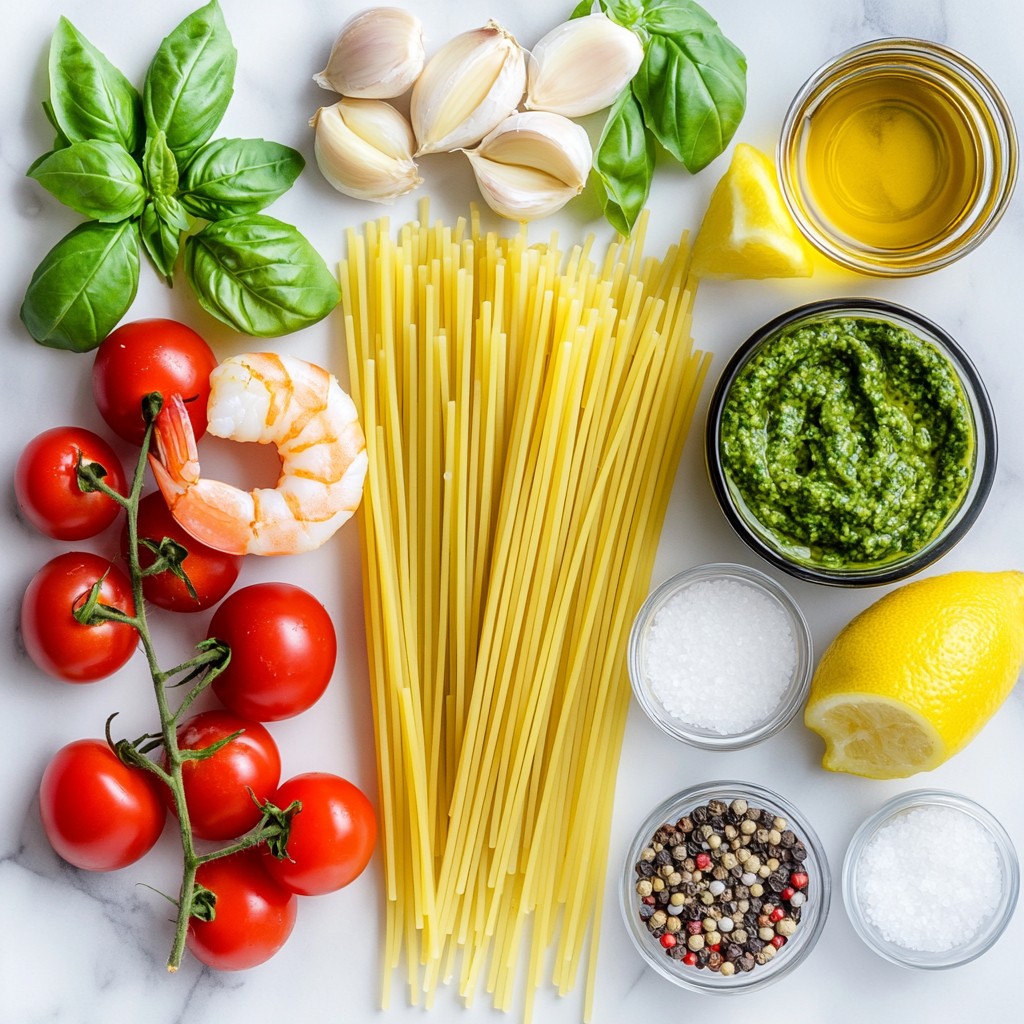
I love to keep things simple yet flavorful. The main ingredients are easy to find. You will want 8 ounces of pasta. Spaghetti or linguine works well here. Next, grab a pound of shrimp. Make sure they are peeled and deveined. For the star of the dish, use a cup of fresh basil pesto. You can buy it or make it at home.
The other ingredients bring extra taste. A cup of halved cherry tomatoes adds a nice pop. Two cloves of minced garlic give depth to the meal. You will need two tablespoons of extra virgin olive oil for cooking. Lastly, use a quarter cup of freshly grated Parmesan cheese to finish the dish.
For garnishes, add fresh basil leaves for a bright touch. Lemon wedges on the side give a zesty kick. Don't forget to season with sea salt and black pepper to taste. These ingredients make this pesto shrimp pasta a winner for any weeknight dinner!
Step-by-Step Instructions
Cooking the Pasta
1. Bring a large pot of salted water to a boil. This step is key for flavor.
2. Add 8 ounces of spaghetti or linguine to the boiling water. Cook until al dente, about 8-10 minutes.
3. Before draining, reserve 1/2 cup of the pasta water. This water helps bind the sauce.
4. After reserving the water, drain the pasta and set it aside.
Preparing the Shrimp
1. In a large skillet, heat 2 tablespoons of extra virgin olive oil over medium heat.
2. Add 2 cloves of minced garlic to the hot oil. Sauté for 1-2 minutes until fragrant. Avoid burning the garlic; it can taste bitter.
3. Next, add 1 pound of peeled and deveined shrimp. Season with sea salt and black pepper.
4. Cook the shrimp for 2-3 minutes on each side until they turn pink and opaque.
5. Remove the shrimp from the skillet, but leave the oil and garlic behind.
Combining Ingredients
1. In the same skillet, add 1 cup of halved cherry tomatoes. Cook for about 3 minutes until they soften and release juices.
2. Return the shrimp to the skillet with the tomatoes. Pour in 1 cup of fresh basil pesto and the reserved pasta water.
3. Stir all the ingredients until well mixed. This mixture should smell amazing.
4. Gently add the drained pasta to the skillet. Toss everything together to coat the noodles in the pesto.
5. If the dish looks too dry, add more pasta water until you reach your desired consistency.
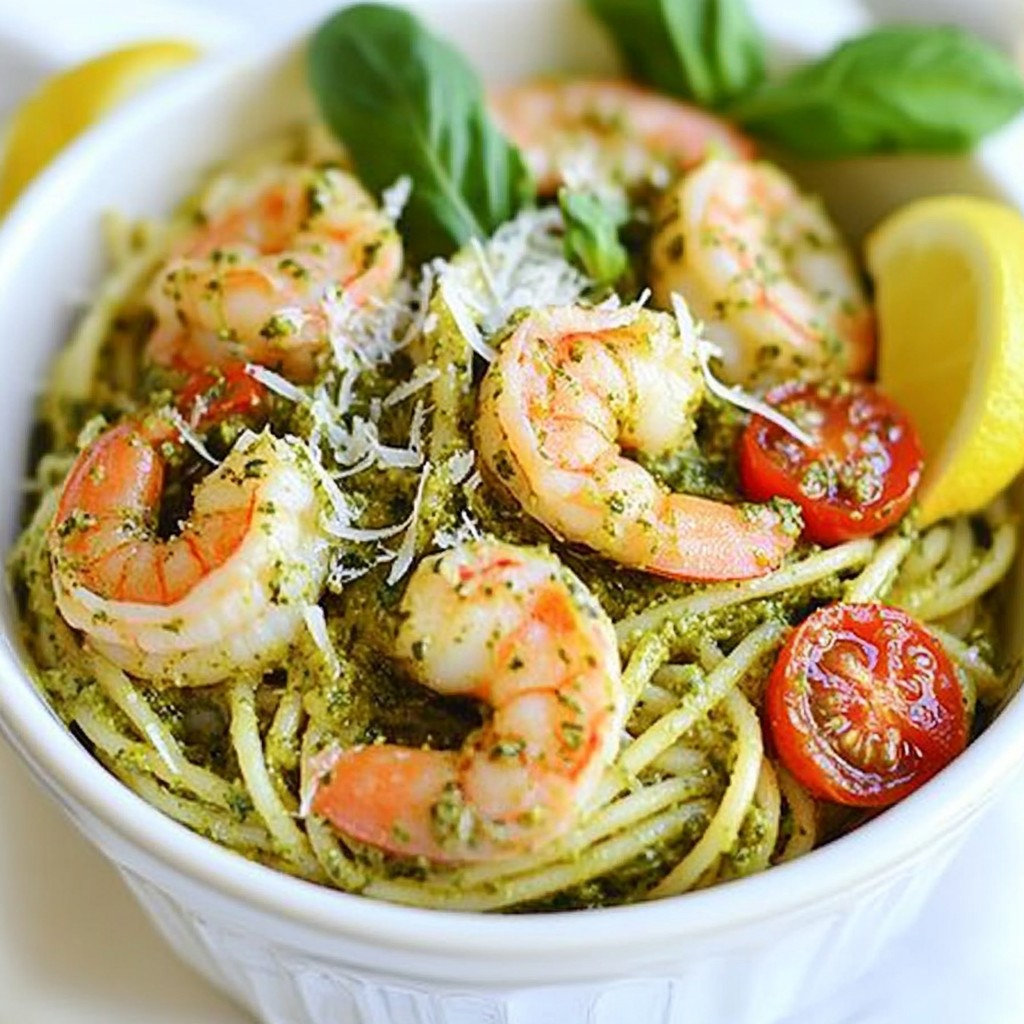
6. Serve the pasta on plates and sprinkle each with freshly grated Parmesan cheese. Add fresh basil leaves and lemon wedges for a pop of color and flavor.
Tips & Tricks
Achieving the Perfect Pasta
To get the best pasta, always use salt in your water. Salt adds flavor. Aim for about 1-2 tablespoons of salt per gallon of water. This will help your pasta taste great.
How do you know when pasta is al dente? Al dente means "to the tooth." It should be firm but not hard. To check, taste a piece a minute or two before the time is up. If it’s slightly chewy, it's ready.
Enhancing Flavor
For the shrimp, I love using sea salt and black pepper. These simple seasonings really boost the flavor. You can also add a pinch of red pepper flakes for some heat.
When sautéing garlic, be careful not to burn it. Heat the olive oil on medium. Add minced garlic and stir for 1-2 minutes. It should smell great but not turn brown. Burnt garlic tastes bitter and can ruin your dish.
Serving Suggestions
For a lovely presentation, serve the pasta in shallow bowls. Place the shrimp on top and sprinkle with Parmesan cheese. You can enhance the look with fresh basil leaves and a drizzle of olive oil.
Pair your meal with a crisp white wine like Sauvignon Blanc. It complements the shrimp and pesto well. A side salad with a light vinaigrette also works great.
Pro Tips
- Fresh Ingredients Matter: Always use the freshest shrimp and basil for the best flavor. Fresh ingredients elevate the dish and enhance the overall taste.
- Don't Overcook the Shrimp: Keep an eye on the shrimp while cooking; they only need about 2-3 minutes per side. Overcooking can result in a rubbery texture.
- Adjust the Consistency: If the pasta seems dry, gradually add more reserved pasta water. This helps create a silky sauce that clings perfectly to the noodles.
- Enhance with Lemon: Serving lemon wedges on the side allows everyone to add a splash of acidity, brightening the flavors and balancing the richness of the pesto.
Variations
Dietary Adjustments
If you're looking for gluten-free pasta options, you can use rice or chickpea pasta. These options work well with the sauce and keep the dish tasty. You can find them in most grocery stores.
For a dairy-free pesto, use a nut-based cheese or nutritional yeast. You can also blend basil, garlic, nuts, and olive oil for a fresh taste. These changes make the dish fit for different diets without losing flavor.
Flavor Variations
You can add more veggies to your dish for extra nutrition. Spinach or bell peppers mix well with the shrimp and pesto. Just sauté them for a few minutes before adding the shrimp. This adds color and crunch.
To spice things up, try adding red pepper flakes. Just a pinch can bring a nice kick. Adjust the amount based on your taste. This small change can create a whole new flavor experience.
Alternative Proteins
If shrimp isn't your favorite, you can easily swap it out. Chicken or scallops can be great alternatives. Cook them the same way you would the shrimp. They absorb the flavors of the pesto beautifully.
For a vegetarian option, consider using tofu. Press and cube the tofu, then sauté until golden. This adds protein while keeping the dish meat-free. Each of these proteins offers its own unique taste and texture, making the meal versatile and fun.
Storage Info
Proper Storage Techniques
To store leftovers, let the pasta cool first. Then, place it in an airtight container. It helps keep the dish fresh. Make sure to use it within three days. For freezing, use a freezer-safe container. This way, you can enjoy it later. It can last up to three months in the freezer.
Reheating Instructions
For reheating, the microwave works well. Place the pasta in a bowl and cover it. Heat it in short bursts, stirring often. This helps it warm evenly. You can also use a pan on the stove. Just add a splash of water to keep it moist. This avoids a dry texture.
Shelf Life Guidelines
Stored pesto shrimp pasta lasts about three days in the fridge. If frozen, it can last three months. Watch for signs of spoilage, like a bad smell or mold. If you see these, it's best to toss it. Always trust your senses when it comes to food safety.
FAQs
How long does it take to make pesto shrimp pasta?
Making pesto shrimp pasta is quick and easy. You will need about 10 minutes for prep. Cooking takes around 20 minutes. In total, you can make this meal in just 30 minutes. This makes it perfect for a busy weeknight dinner.
Can I use store-bought pesto?
Yes, you can use store-bought pesto. It saves time and can taste great. However, homemade pesto often has fresher flavors. Store-bought pesto may be high in salt or preservatives. Read the label to choose a quality product.
What can I substitute for shrimp?
If you want a different protein, try chicken or scallops. For a vegetarian option, use tofu or chickpeas. These substitutes will still work well with pesto. Adjust cooking times as needed to ensure everything is cooked properly.
Is this recipe healthy?
Pesto shrimp pasta can be a healthy meal. Shrimp is high in protein and low in calories. The fresh basil pesto adds healthy fats from olive oil and nuts. Cherry tomatoes provide vitamins and antioxidants. This dish offers a balance of nutrients, making it a good choice for many diets.
This blog post shared a tasty recipe for pesto shrimp pasta. You learned about the main ingredients, optional garnishes, and step-by-step instructions to make it. We explored tips for perfecting the dish, variations for dietary needs, and storage methods for leftovers.
Enjoy this dish with friends or family. It’s quick, easy, and packed with flavor. Now, you have all the tools to create your own perfect pesto shrimp pasta. Dive in and enjoy every bite!