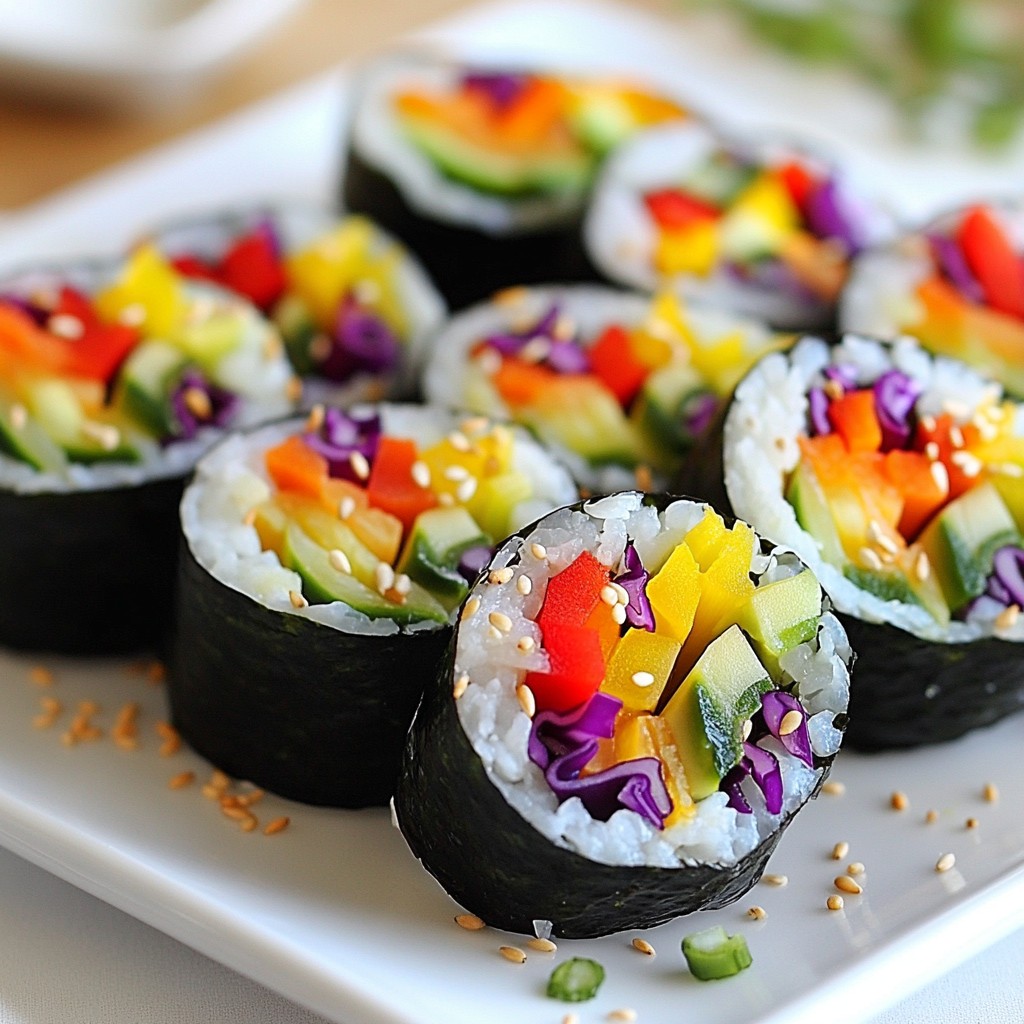
Are you ready to dive into a colorful world of flavors? Rainbow Veggie Sushi Rolls are not just a feast for the eyes; they’re fun, healthy bites you can make right at home. With fresh veggies, creamy avocado, and perfectly seasoned rice, these sushi rolls will delight your taste buds. Let’s explore simple steps, tips, and creative variations to make your sushi-making experience easy and enjoyable!
Why I Love This Recipe
- Colorful Presentation: The vibrant colors of the vegetables create a visually stunning dish that is as appealing to the eyes as it is to the palate.
- Customizable Ingredients: You can easily swap out the vegetables for your favorites or whatever you have on hand, making it a versatile recipe for any occasion.
- Healthy and Nutritious: Packed with fresh veggies and healthy fats from the avocado, this sushi is not only delicious but also good for you.
- Fun to Make: Rolling sushi can be a fun activity for families or friends, making it a great way to spend quality time together in the kitchen.
Ingredients
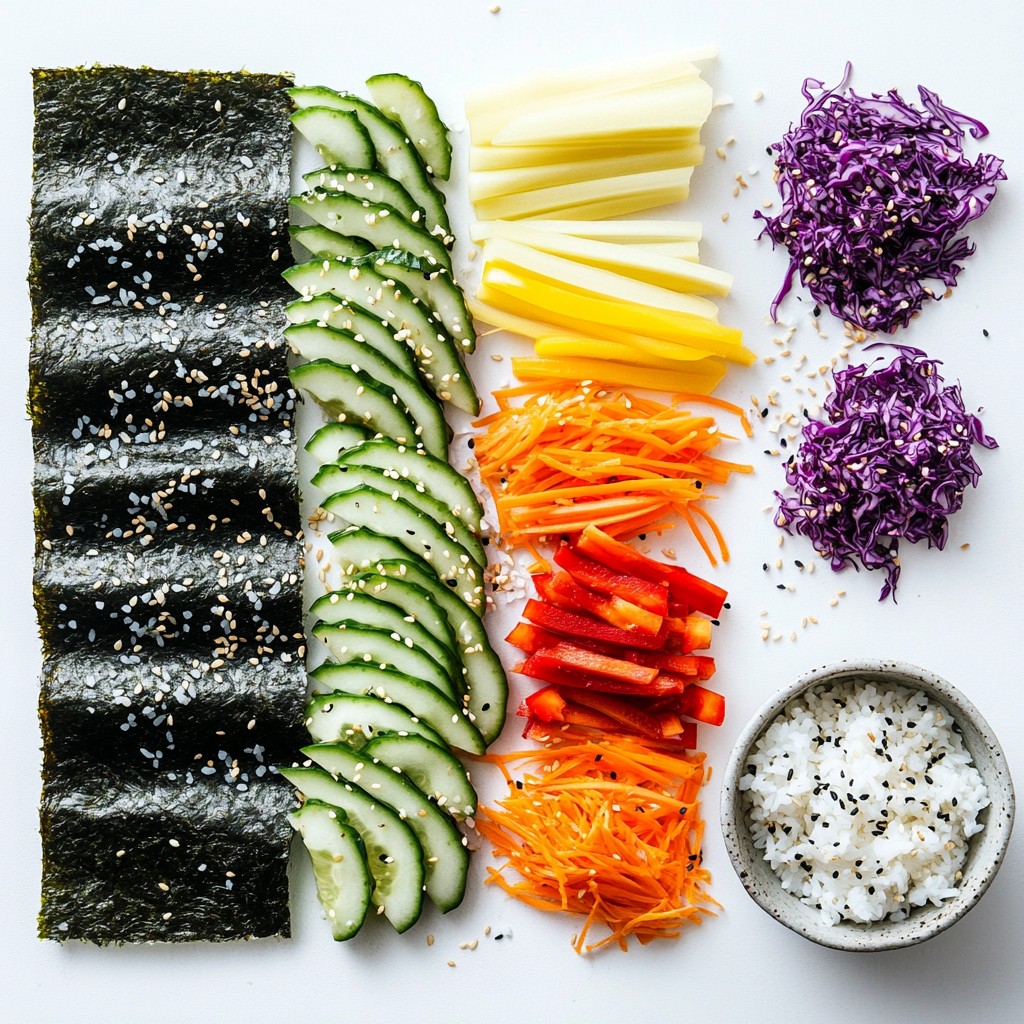
Main Ingredients for Rainbow Veggie Sushi Rolls
- 2 cups sushi rice
- 3 cups water
- 1/4 cup rice vinegar
- 1 tablespoon sugar
- 1 teaspoon salt
- 4 sheets of nori (seaweed)
- 1/2 cucumber, julienned
- 1 ripe avocado, sliced
- 1 large carrot, grated
- 1/2 red bell pepper, cut into thin strips
- 1/2 yellow bell pepper, cut into thin strips
- 1/2 cup purple cabbage, finely shredded
- 1/4 cup sesame seeds (optional)
- Soy sauce, for dipping
Equipment Needed
- Bamboo sushi mat
- Medium-sized saucepan
- Large bowl
- Wooden spatula
- Sharp knife
- Clean platter
Optional Ingredients for Variations
- Additional vegetables like radish or zucchini
- Fresh herbs like cilantro or basil
- Spicy mayo for dipping
- Pickled ginger for garnish
- Wasabi for a kick
Step-by-Step Instructions
Preparing the Sushi Rice
To make sushi rice, first rinse the rice. Use cold water and rinse until the water is clear. This step removes excess starch. After rinsing, drain the rice well. In a medium saucepan, mix the rinsed rice with 3 cups of water. Bring the water to a boil over medium-high heat. Once boiling, lower the heat to low. Cover the saucepan and let it simmer for 20 minutes. After this time, turn off the heat but keep the lid on for an extra 10 minutes. This helps the rice finish cooking perfectly.
Seasoning the Rice
While the rice cooks, prepare the seasoning. In a small bowl, whisk together rice vinegar, sugar, and salt. Mix until both the sugar and salt dissolve. After the rice sits, move it to a large bowl. Once slightly cooled, gently fold in the vinegar mixture using a wooden spatula. Be careful not to mash the rice. Let the rice cool to room temperature before you roll.
Assembling the Sushi Rolls
Now comes the fun part—assembling the sushi! Start by laying a bamboo sushi mat on a flat surface. Place a sheet of nori on top, shiny side facing down. Wet your hands to prevent the rice from sticking. Grab about 1 cup of sushi rice and evenly spread it over the nori. Leave a 1-inch border at the top edge.
In the center, arrange a line of each vegetable. You can use cucumber, avocado, carrot, red bell pepper, yellow bell pepper, and purple cabbage. If you like, sprinkle sesame seeds on top for added crunch.
Starting from the bottom edge, lift the bamboo mat and roll it over the filling. Apply gentle pressure to keep the filling tucked in. Roll until you reach the bare edge of the nori. Moisten this edge with a bit of water to seal the roll.
Finally, use a sharp knife to slice the sushi roll into bite-sized pieces. Clean the knife with a damp cloth between each cut for clean slices. Arrange the rolls on a platter and enjoy!
Tips & Tricks
Perfect Rolling Techniques
To roll sushi well, you need to know a few things. First, keep your hands wet. This will stop the rice from sticking. Use a bamboo mat to help with the roll. Start at the edge where you put the filling. Roll it tightly, but not too tight. You want the roll to hold together without squishing the filling out. As you roll, gently pull the mat. This keeps everything in place. When you reach the edge, wet it with water to seal the roll.
Avoiding Common Mistakes
One common mistake is adding too much rice. Stick to about 1 cup for each roll. If there's too much rice, it can be hard to roll. Another mistake is not preparing your fillings. Have all your veggies cut and ready before you start. If you wait until after the rice is ready, it can dry out. Lastly, don’t rush the cutting. Use a sharp knife and clean it often. This keeps the rolls looking nice and fresh.
Recommended Tools for Easy Preparation
To make sushi at home, having the right tools helps a lot. Here’s what I suggest:
- Bamboo sushi mat: This helps you roll tightly and evenly.
- Sharp knife: A good knife cuts through the rolls cleanly.
- Rice cooker: This makes cooking sushi rice easy and perfect.
- Cutting board: A clean board gives you space to prep your veggies.
- Small bowls: Use these for your sauces and extra toppings.
With these tools, you’ll find sushi-making fun and easy!
Pro Tips
- Use Fresh Ingredients: The key to vibrant and flavorful sushi is using the freshest vegetables and fish you can find. Visit your local market or grocery store to select the best produce.
- Keep Your Hands Wet: Wetting your hands while handling sushi rice helps prevent it from sticking to your fingers, making the rolling process cleaner and easier.
- Experiment with Fillings: Feel free to get creative with your fillings! Try adding cooked shrimp, crab, or different vegetables to customize your sushi rolls according to your taste preferences.
- Practice Your Rolling Technique: Rolling sushi takes practice. Start with a gentle but firm pressure, and don’t rush the process. The more you practice, the better your rolls will turn out!
Variations
Substitutes for Vegetables
You can switch out the veggies in your sushi rolls. Instead of cucumber, try zucchini or bell pepper. For a crunch, use radishes or sprouts. You can also add leafy greens like spinach or arugula. If you want a bit of spice, include jalapeños or kimchi. The key is to keep it colorful and fresh!
Adding Proteins or Other Fillings
To make your sushi rolls heartier, add proteins. Cooked shrimp or crab meat works great. For a vegetarian option, try tofu or tempeh. You can also include cream cheese for a creamy texture. Experimenting with different fillings will keep your sushi exciting!
Different Types of Sushi Rice
While traditional sushi rice is sticky and short-grain, you can try other types. For a nutty flavor, use brown rice. Quinoa is a great gluten-free option that adds protein. Just remember, whatever rice you use, it should hold together well for rolling.
Storage Info
How to Store Leftover Sushi Rolls
To keep leftover sushi rolls fresh, wrap them tightly in plastic wrap. This helps prevent drying out. Place the wrapped rolls in an airtight container. Store them in the fridge for up to 24 hours.
Best Practices for Freshness
Always eat sushi rolls fresh for the best taste. If you have to store them, keep fillings separate. Store the rice and veggies in different containers. This way, they stay fresh and tasty.
Freezing Sushi Rolls
You can freeze sushi rolls, but it's not always the best option. If you choose to freeze, wrap each roll in plastic wrap. Then, place them in a freezer bag. They can last for up to a month. When ready to eat, thaw them in the fridge overnight.
FAQs
How do I keep sushi rice from sticking?
To keep the sushi rice from sticking, wet your hands. Before handling the rice, rinse your hands with water. This step helps prevent the rice from clinging to your fingers. You can also add a little rice vinegar to the water for extra non-stick properties.
- Always keep a bowl of water handy.
- Use a wooden spatula to mix the rice gently.
These methods help maintain the rice's texture and make rolling easier.
Can I use brown rice for sushi?
Yes, you can use brown rice for sushi. Brown rice adds a nutty flavor and is more nutritious than white rice. However, it has a different texture and takes longer to cook.
- Adjust the water-to-rice ratio to 2.5 cups water for 1 cup brown rice.
- Cook for about 45 minutes instead of 20 minutes.
Brown rice sushi rolls might be chewier, but they are still delicious!
What can I serve with rainbow veggie sushi rolls?
Rainbow veggie sushi rolls pair well with several sides. Here are a few ideas:
- Edamame, lightly salted
- Pickled ginger for a refreshing bite
- Wasabi for those who like heat
- A crisp salad with sesame dressing
These sides enhance the sushi's flavor and make your meal more fun. Enjoy exploring different combinations!
With this guide, you learned the key ingredients and steps to make rainbow veggie sushi rolls. We covered how to prepare and season the sushi rice, roll the sushi, and avoid common mistakes. You can also experiment with different veggies, proteins, and rice types. Remember, storage is key for maintaining freshness. Always keep leftover rolls in the fridge or freeze them. Now, you can impress friends and family with your sushi skills at home. Enjoy your cooking journey!