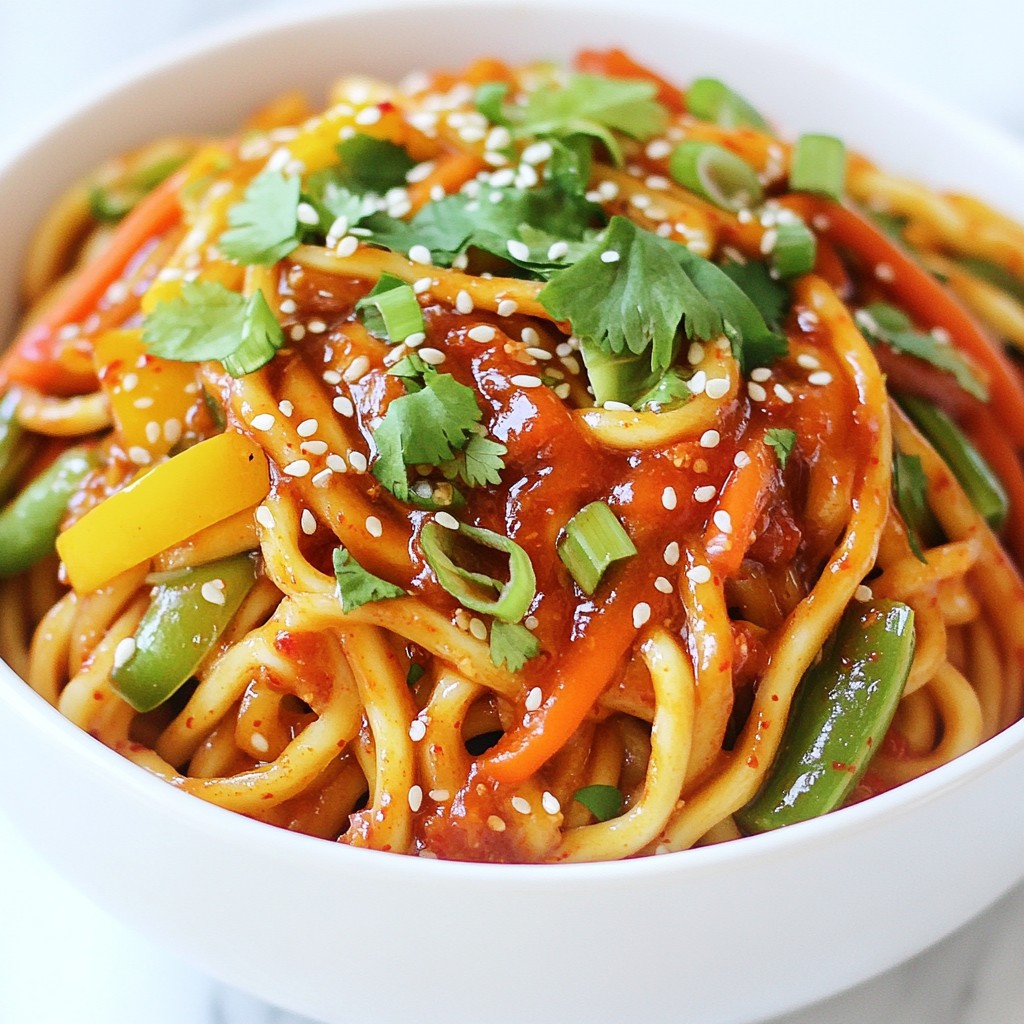
Craving a bold and delicious meal? Look no further than spicy Korean gochujang noodles! This simple and quick recipe brings the rich flavors of Korean cuisine right to your kitchen. With just a few key ingredients, you can whip up a dish that's not only tasty but also packed with health benefits. Let’s dive into the steps to make these mouthwatering noodles that will spice up your dinner routine!
Why I Love This Recipe
- Bold Flavors: The combination of gochujang, sesame oil, and fresh ingredients creates a dynamic flavor profile that is both spicy and savory.
- Quick to Make: With a total time of just 20 minutes, this recipe is perfect for busy weeknights or when you need a speedy meal.
- Customizable: You can easily swap in your favorite vegetables or proteins, making this dish versatile for any palate.
- Healthful Ingredients: Packed with veggies and wholesome ingredients, this dish is a delicious way to enjoy a nutritious meal.
Ingredients
Key Ingredients for Spicy Korean Gochujang Noodles
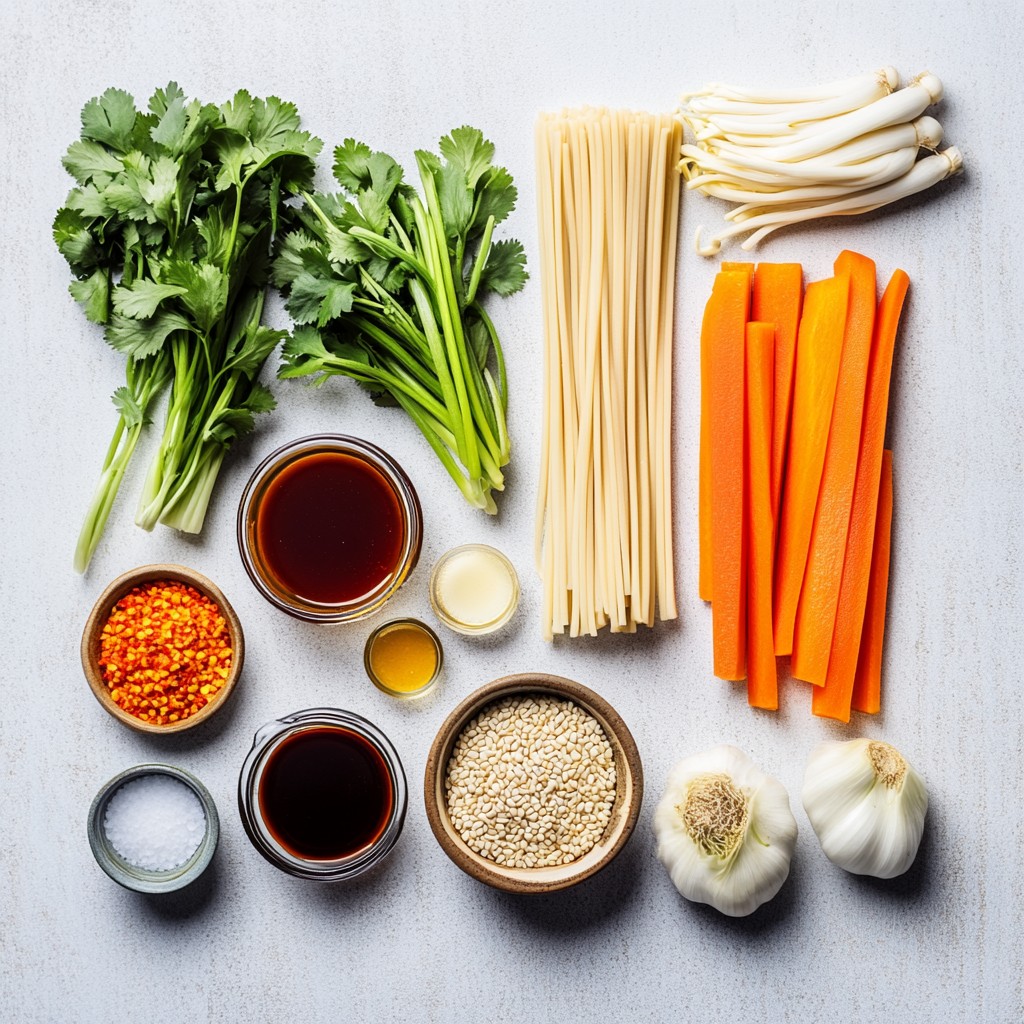
For this dish, you need a few key ingredients to create bold flavors. Here’s what you’ll gather:
- 200g noodles of your choice (udon or soba for best results)
- 2 tablespoons gochujang (Korean chili paste)
- 1 tablespoon sesame oil
- 1 tablespoon soy sauce
- 1 tablespoon honey or maple syrup
- 1 teaspoon minced garlic
- 1 teaspoon minced ginger
- 1 cup mixed vegetables (a colorful mix of carrots, bell peppers, and bok choy)
- 2 green onions, thinly sliced
- 1 tablespoon sesame seeds for garnish
- Fresh cilantro for garnish
- Salt and black pepper to taste
Variations of Ingredients
You can switch up the noodles based on your taste. Udon and soba work great, but you can also use rice noodles or even whole grain noodles. For the vegetables, feel free to mix in what you love. Snow peas, broccoli, or zucchini can add more crunch and flavor. If you want to make it heartier, you can add proteins like chicken, shrimp, or tofu.
Health Benefits of Gochujang and Other Ingredients
Gochujang is not just spicy; it brings health benefits too. It has antioxidants and can boost your metabolism. The garlic and ginger add more than flavor; they help support your immune system. Mixed vegetables bring fiber and vitamins to your meal. This dish is not only delicious but also a healthy choice that can nourish your body.
Step-by-Step Instructions
How to Cook the Noodles
Start by boiling water. Use a large pot for this. Once the water boils, add 200g of your favorite noodles. I recommend udon or soba for the best flavor. Cook the noodles according to the package instructions. You want them to be al dente. This usually takes about 5 to 7 minutes. When done, drain the noodles. Rinse them under cold water to stop the cooking. Set them aside to drain fully.
Preparing the Gochujang Sauce
In a small mixing bowl, gather your sauce ingredients. Combine 2 tablespoons of gochujang, 1 tablespoon of sesame oil, and 1 tablespoon of soy sauce. Add 1 tablespoon of honey or maple syrup for sweetness. Next, add 1 teaspoon of minced garlic and 1 teaspoon of minced ginger. Whisk everything together until smooth. This sauce will give your noodles a spicy kick and rich flavor.
Sautéing the Vegetables
Grab a large skillet or wok. Heat a tablespoon of oil over medium-high heat. Add 1 cup of mixed vegetables, like carrots, bell peppers, and bok choy. Stir-fry these for about 3 to 4 minutes. Keep stirring until the veggies soften but still have a nice crunch. This step makes your dish colorful and healthy.
Tips & Tricks
Common Mistakes to Avoid
When making spicy Korean gochujang noodles, avoid overcooking the noodles. They should be al dente. If you cook them too long, they turn mushy. Another mistake is not rinsing the noodles after cooking. Rinsing stops the cooking process and removes extra starch. This helps the noodles soak up the sauce better. Lastly, don’t skip tasting your dish before serving. A little salt or pepper can make a big difference.
Best Cooking Methods for Noodles
For the best texture, boil your noodles in a large pot. Use plenty of water to prevent sticking. After boiling, rinse them in cold water. This method keeps them firm. You can also try stir-frying the noodles after boiling. This adds a nice flavor and helps the noodles absorb the sauce. Just toss them in the pan for a minute after adding the sauce.
Serving Suggestions and Pairings
Spicy Korean gochujang noodles shine with fresh toppings. Add thinly sliced green onions for crunch. Sesame seeds add a nutty flavor. Fresh cilantro brightens the dish. For a complete meal, serve these noodles with grilled chicken or tofu. They also pair well with a side of kimchi. If you like more spice, serve with extra gochujang on the side. Enjoy your meal with a refreshing drink, like iced green tea.
Pro Tips
- Use Fresh Vegetables: Fresh vegetables not only enhance the flavor but also add vibrant colors to your dish, making it more visually appealing.
- Adjust the Spice Level: If you're sensitive to heat, start with less gochujang and gradually add more to suit your taste preference.
- Customize Your Noodles: Feel free to experiment with different types of noodles such as rice noodles or even zucchini noodles for a gluten-free option.
- Make It a Meal: Add protein like tofu, chicken, or shrimp to make this dish more filling and nutritious.
Variations
Vegetarian Options for Gochujang Noodles
You can easily make your gochujang noodles vegetarian. Use vegetable broth instead of water when cooking the noodles. Add more colorful veggies like zucchini, mushrooms, or snap peas. You can also toss in tofu for a protein boost. Tofu absorbs the sauce well and adds a nice texture.
Protein Additions (tofu, chicken, shrimp)
If you want a protein kick, try adding chicken or shrimp. Cook these first by sautéing them in the skillet until done. Then, add the veggies and noodles. For tofu, use firm tofu, and pan-fry it until golden. This gives a nice crunch. These additions make the dish filling and hearty.
Heat Level Adjustments
Not everyone likes spicy food. If you want less heat, use less gochujang. You can start with one tablespoon and add more if needed. Alternatively, add a bit of sugar or honey to balance the spice. For more heat, try adding sliced fresh chili peppers or chili flakes. Adjust to your taste for the perfect bowl!
Storage Info
How to Store Leftover Noodles
To store leftover noodles, let them cool first. Place the noodles in an airtight container. Make sure to separate the noodles from the sauce and veggies. This keeps them fresh longer. You can keep them in the fridge for up to three days.
Reheating Tips for Gochujang Noodles
When reheating, add a splash of water to the noodles. This helps them stay moist. Use a pan over medium heat to warm them up. Stir gently until heated through. You can also use a microwave, but cover the bowl to keep steam in. Heat for one minute, then check if they are warm.
Freezing Options and Best Practices
You can freeze the noodles for later use. Place cooled noodles in a freezer-safe bag. Remove as much air as possible. They can last up to three months in the freezer. When ready to eat, thaw them overnight in the fridge. Reheat as mentioned before. Avoid refreezing once they’re thawed.
FAQs
What is Gochujang and how is it used?
Gochujang is a thick, spicy paste made from red chili peppers, glutinous rice, fermented soybeans, and salt. It adds heat and depth to dishes. You can use it in sauces, marinades, and soups. In Spicy Korean Gochujang Noodles, it gives a bold flavor that makes the dish exciting and unique.
Can I make Spicy Korean Gochujang Noodles ahead of time?
Yes, you can make these noodles ahead of time. Cook the noodles and veggies, then toss them with the sauce. Store everything in an airtight container in the fridge. When you're ready to eat, just reheat it in a pan or microwave. The flavors will stay vibrant and tasty!
Where can I buy authentic Gochujang?
You can find authentic gochujang in Asian grocery stores or online. Look for brands that use quality ingredients without fillers. Many supermarkets now carry it in their international aisle. Make sure to check the label for authenticity to get the best flavor for your noodles.
You learned how to make delicious Spicy Korean Gochujang Noodles. We covered key ingredients, cooking steps, and tips. You can try different noodles and veggies. Remember to avoid common mistakes for best results. Storing and reheating are simple if you follow the steps.
Spicy Korean Gochujang Noodles can fit into many diets. With options for heat and protein, you can customize this dish. Enjoy creating your flavorful bowl of noodles!