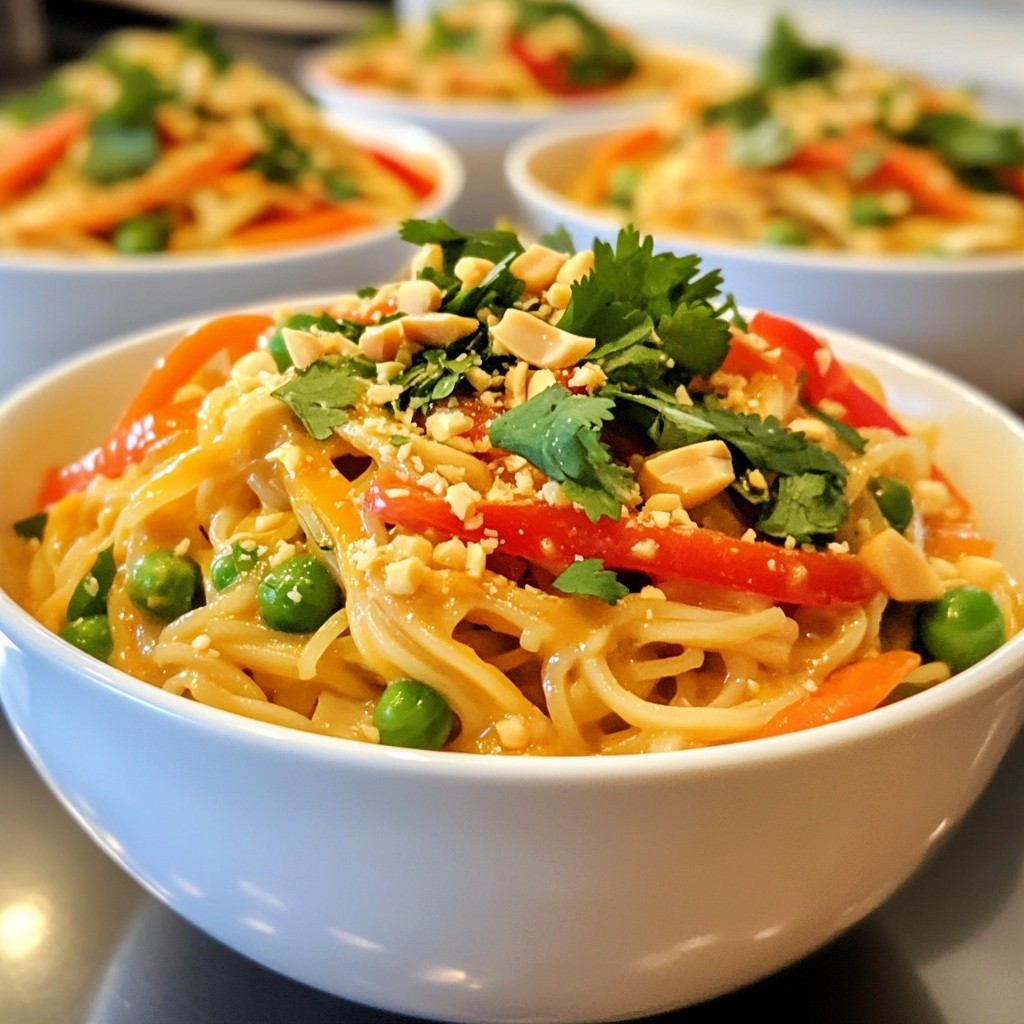
Do you crave a quick and tasty meal? Spicy Thai Peanut Noodles combine bold flavors with easy steps. From creamy peanut sauce to crunchy veggies, each bite delights your senses. This recipe is not just delicious; it’s also flexible, letting you customize it to fit your tastes. Ready to create a dish that brings the taste of Thailand home? Let’s get cooking!
Why I Love This Recipe
- Quick and Easy: This recipe comes together in just 20 minutes, making it perfect for busy weeknights or last-minute meals.
- Flavorful and Spicy: The combination of peanut butter, chili paste, and fresh lime juice creates a deliciously spicy and tangy sauce that elevates the dish.
- Customizable: You can easily adjust the spice level, add your favorite vegetables, or make it vegan by swapping honey for maple syrup.
- Healthy Ingredients: Packed with fresh vegetables and wholesome ingredients, this dish is not only tasty but also nutritious.
Ingredients
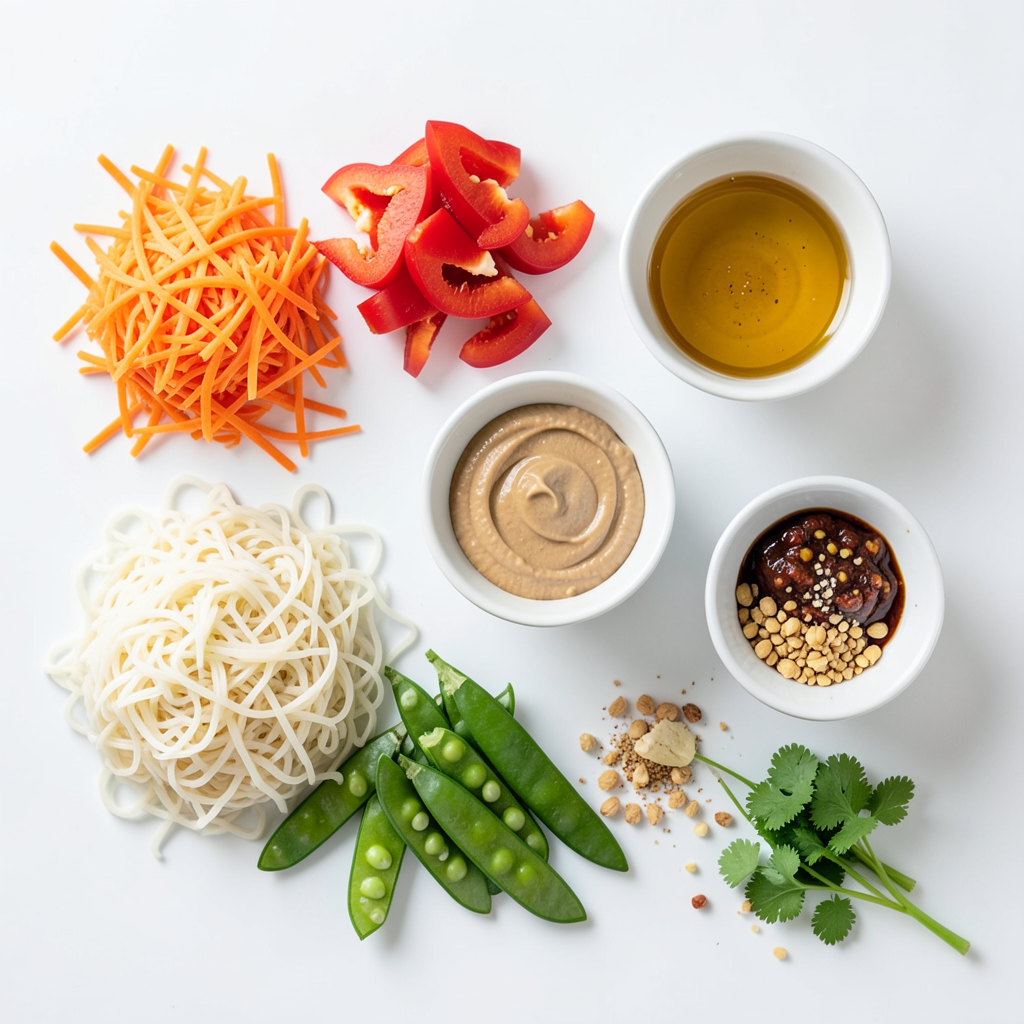
List of Ingredients
- 8 ounces rice noodles
- 1 cup shredded carrots
- 1 red bell pepper, thinly sliced
- 1 cup snap peas, trimmed and halved
- 3 green onions, sliced diagonally
- 1/2 cup unsalted creamy peanut butter
- 2 tablespoons low-sodium soy sauce
- 2 tablespoons freshly squeezed lime juice
- 1 tablespoon honey or maple syrup (for vegan option)
- 1 tablespoon chili paste (adjust based on your heat preference)
- 2 cloves garlic, finely minced
- 1 tablespoon sesame oil (plus more for sautéing)
- Crushed peanuts and fresh cilantro, for garnish
Essential Ingredients for the Sauce
The sauce is key to this dish. You need creamy peanut butter for that rich texture. Low-sodium soy sauce adds umami without too much salt. Fresh lime juice gives a zesty kick. Honey or maple syrup adds a bit of sweetness. Chili paste is crucial for heat; adjust it to your taste. Lastly, minced garlic and sesame oil enhance the flavor and aroma.
Optional Garnishes
Garnishes make your dish shine. Crushed peanuts add a crunch and nutty taste. Fresh cilantro brings a burst of color and freshness. You can also add lime wedges for extra zing. These simple touches elevate your meal and make it look beautiful on the plate.
Step-by-Step Instructions
Cooking the Rice Noodles
To cook the rice noodles, boil a large pot of water. Add 8 ounces of rice noodles. Cook them for 4 to 6 minutes, or until they are al dente. Drain the noodles in a colander. Rinse them with cold water. This stops the cooking and cools them down.
Preparing the Peanut Sauce
In a medium bowl, combine the following for the peanut sauce:
- 1/2 cup unsalted creamy peanut butter
- 2 tablespoons low-sodium soy sauce
- 2 tablespoons freshly squeezed lime juice
- 1 tablespoon honey or maple syrup
- 1 tablespoon chili paste
- 2 cloves garlic, minced
- 1 tablespoon sesame oil
Whisk these ingredients together until smooth. If the sauce is too thick, add a small splash of warm water.
Sautéing Vegetables
Heat a teaspoon of sesame oil in a large skillet over medium heat. When the oil is hot, add:
- 1 cup shredded carrots
- 1 red bell pepper, thinly sliced
- 1 cup snap peas, trimmed and halved
Sauté the vegetables for 3 to 4 minutes. Keep tossing them to make sure they stay slightly crunchy.
Combining Noodles and Sauce
Add the drained rice noodles to the skillet with the sautéed vegetables. Pour the peanut sauce over everything. Use tongs to toss the mixture well. Make sure all the noodles and vegetables are coated. Heat everything together for about 2 to 3 minutes.
Final Touches and Serving
Remove the skillet from heat. Fold in sliced green onions. Taste the dish. If needed, adjust the flavors with more lime juice or chili paste. Serve the noodles in bowls. Top with crushed peanuts and fresh cilantro for garnish. Enjoy your meal!
Tips & Tricks
Best Tips for Cooking Noodles
When cooking rice noodles, always check the package for time. Cook them until they are al dente, which means they should still have a slight bite. After draining, rinse them with cold water. This stops the cooking and keeps them from sticking together. Use a large pot to give the noodles space to move. This helps them cook evenly.
Adjusting Spice Levels
If you like heat, add more chili paste. Start with one tablespoon and taste. You can always add more, but you can't take it out. If the dish is too spicy, add more peanut butter or a pinch of sugar. This helps balance the heat. Lime juice also brightens flavors and can reduce spiciness.
How to Make It Vegan
To make this dish vegan, swap honey for maple syrup. Use low-sodium soy sauce or tamari for a gluten-free option. All other ingredients are already plant-based. Focus on fresh veggies and creamy peanut butter. This keeps the dish rich, satisfying, and completely vegan-friendly.
Pro Tips
- Adjust the Spice Level: You can modify the amount of chili paste according to your personal taste. Start with less if you're unsure and add more gradually until it’s just right for you.
- Perfectly Cooked Noodles: Be careful not to overcook the rice noodles. They should be al dente, as they will continue to soften when mixed with the hot sauce and vegetables.
- Fresh Ingredients Matter: Using fresh vegetables will enhance the flavor and texture of the dish. Look for vibrant, crisp veggies at your local market.
- Make Ahead: You can prepare the peanut sauce in advance and store it in an airtight container in the fridge. This will save you time when you're ready to cook!
Variations
Alternative Proteins to Add
You can boost the protein in your Spicy Thai Peanut Noodles with some easy swaps. Here are a few tasty options:
- Chicken: Cooked chicken breast adds a nice texture.
- Shrimp: Sauté shrimp until they turn pink and add them.
- Tofu: Firm tofu works great. Cube it and sauté until golden.
- Tempeh: This adds a nutty flavor and is a great plant-based option.
Different Vegetables to Include
Feel free to mix in more veggies for extra crunch and color. Here are some ideas:
- Broccoli: Add small florets for a nice bite.
- Zucchini: Slice it thin to cook quickly.
- Mushrooms: Use any type you like for added umami.
- Bean Sprouts: They add a fresh, crisp texture.
Gluten-Free Options
If you need a gluten-free meal, it’s easy to adapt this dish. Here are your choices:
- Rice Noodles: They are naturally gluten-free.
- Tamari: Use tamari instead of soy sauce for a gluten-free sauce.
- Check Labels: Always check labels on sauces and other ingredients to ensure they are gluten-free.
Storage Info
Storing Leftovers
To store leftovers, place them in an airtight container. Make sure to let them cool first. You can keep them in the fridge for up to three days. This dish tastes great even the next day.
Reheating Instructions
To reheat, use a non-stick skillet over low heat. Add a splash of water to keep the noodles moist. Stir gently until heated through. You can also use a microwave. Heat in short bursts, stirring in between, until warm.
Freezing Tips
You can freeze these noodles, but the veggies may lose some texture. To freeze, place the cooled noodles in a freezer-safe bag. Remove as much air as possible. Store for up to three months. Thaw in the fridge overnight before reheating.
FAQs
What is the origin of Spicy Thai Peanut Noodles?
Spicy Thai Peanut Noodles come from Thailand. They mix rich flavors with fresh veggies. The dish highlights peanuts, a common ingredient in Thai food. This recipe reflects the balance of sweet, salty, and spicy. It is popular in street food stalls and homes alike.
Can I make this recipe ahead of time?
Yes, you can make Spicy Thai Peanut Noodles ahead of time. Cook the noodles and sauce separately. Store them in airtight containers. When ready to eat, reheat the noodles. Add the sauce just before serving to keep them fresh and tasty.
How can I make it more filling?
To make the dish more filling, add protein. You can use grilled chicken, shrimp, or tofu. Nuts or seeds also add healthy fats. Feel free to toss in more veggies like broccoli or bok choy. This will boost fiber and nutrients too.
What to serve with Spicy Thai Peanut Noodles?
Serve these noodles with a side salad or spring rolls. A light cucumber salad pairs well too. You can also enjoy them with Thai iced tea or coconut water. These sides keep the meal light and refreshing.
This post covered the key ingredients and steps for making Spicy Thai Peanut Noodles. You learned how to cook rice noodles, prepare the sauce, and sauté veggies. We also shared tips for spice levels, vegan options, and variations to try. Finally, I gave advice on storing and reheating leftovers.
With these methods, you can create a tasty, satisfying dish that suits your tastes. Enjoy making this delightful meal!