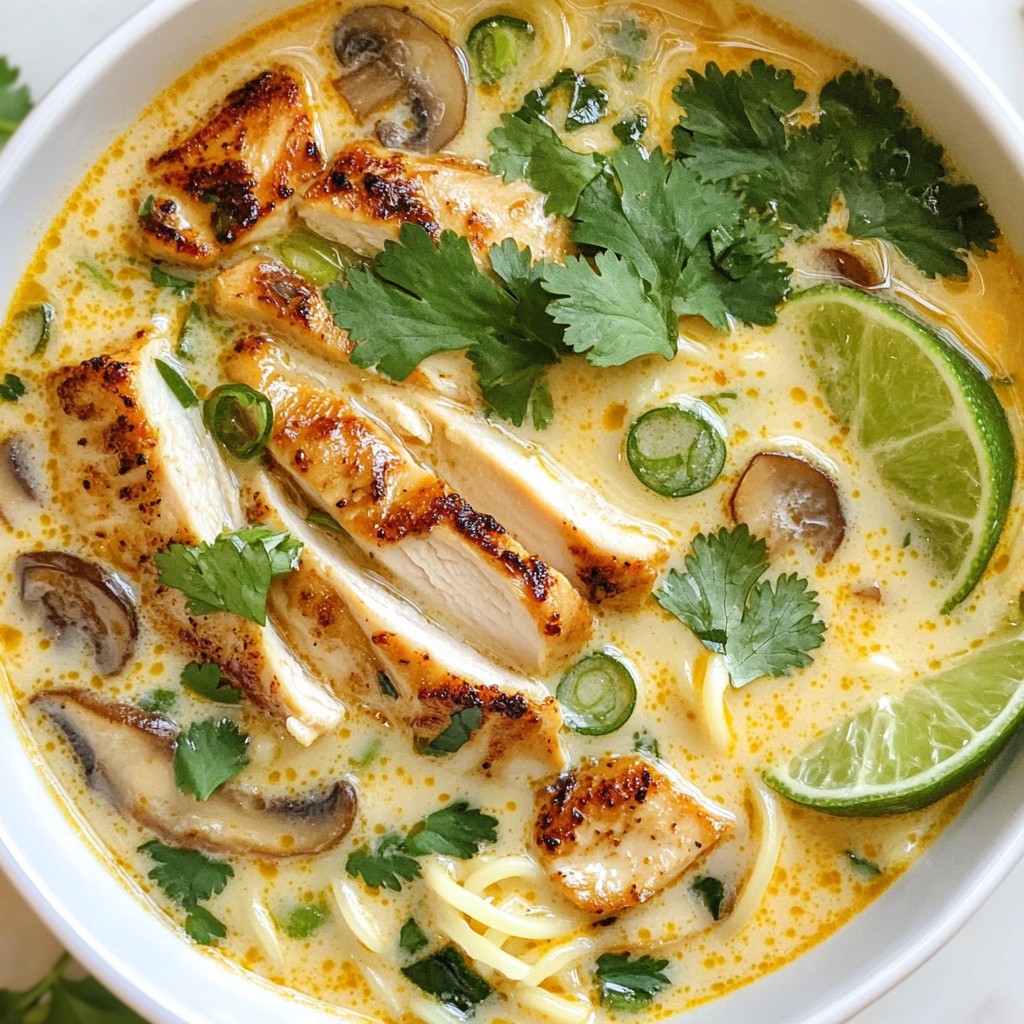
Looking for a warm, comforting dish that's packed with flavor? Thai Coconut Chicken Soup is your answer! With tender chicken, creamy coconut milk, and aromatic herbs, this soup brings a taste of Thailand right to your kitchen. Join me as I guide you through easy steps to create this delicious dish. You’ll impress your friends and family with your culinary skills, and you'll love every savory spoonful!
Why I Love This Recipe
- Deliciously Creamy: The rich coconut milk creates a smooth and indulgent base that perfectly complements the tender chicken and fresh ingredients.
- Flavorful Aromatics: The combination of lemongrass, kaffir lime leaves, and galangal infuses the soup with authentic Thai flavors that are aromatic and uplifting.
- Customizable Spice Level: With the option to adjust the number of bird's eye chilies, this recipe lets you control the heat to suit your taste preferences.
- Quick and Easy: This soup comes together in just 30 minutes, making it a perfect choice for a weeknight dinner that doesn’t compromise on flavor.
Ingredients
List of Main Ingredients
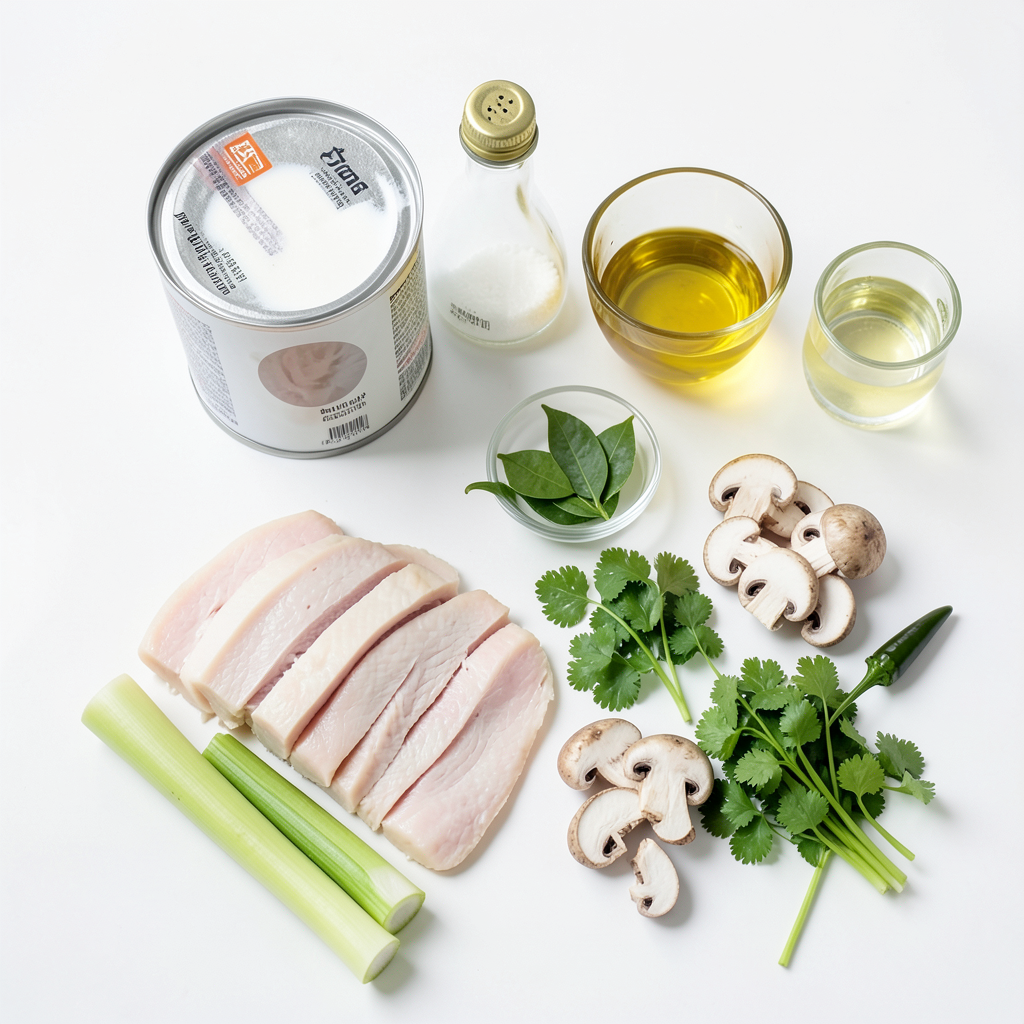
- 1 lb boneless chicken breast
- 1 can (13.5 oz) coconut milk
- 2 cups chicken broth
- 1 stalk lemongrass
- 3-4 kaffir lime leaves
Optional Ingredients
- 1 inch piece of galangal or ginger
- 2-3 Thai bird's eye chilies
- 1 cup mushrooms, sliced (shiitake or button)
Seasonings and Garnishes
- 2 tablespoons fish sauce
- 1 tablespoon fresh lime juice
- Salt, to taste
- Fresh cilantro and green onions, finely chopped
Step-by-Step Instructions
Preparation and Cooking
1. First, heat 1 tablespoon of olive oil in a large pot over medium heat.
2. Once the oil is hot, add 1 pound of thinly sliced chicken breast.
3. Sauté the chicken for about 3-4 minutes. Cook until the chicken is no longer pink.
4. Next, pour in 1 can of coconut milk and 2 cups of chicken broth.
5. Stir well to mix all the ingredients together.
Infusing Flavors
1. Now, add 1 stalk of smashed lemongrass, 3-4 torn kaffir lime leaves, and 1 inch of sliced galangal or ginger.
2. Toss in 2-3 whole Thai bird's eye chilies for some heat.
3. Raise the heat slightly and bring the soup to a gentle boil.
4. Once boiling, lower the heat and let it simmer for about 10 minutes. This step helps the flavors blend nicely.
Finalizing the Dish
1. After 10 minutes, mix in 1 cup of sliced mushrooms.
2. Add 2 tablespoons of fish sauce and 1 tablespoon of fresh lime juice.
3. Cook for another 5 minutes until the mushrooms soften and flavor the soup.
4. Taste the soup and season with salt and more lime juice if needed.
5. Finally, remove the pot from heat and discard the lemongrass, lime leaves, and galangal slices. This will give you a smooth soup.
Tips & Tricks
Cooking Tips
- Ensuring tender chicken: Slice the chicken thin for quick cooking. Sauté it over medium heat until no longer pink. This keeps the chicken juicy and tender.
- Balancing spice and acidity: Use bird's eye chilies for heat. For a bright taste, add fresh lime juice. Adjust to your liking as you cook.
Presentation Tips
- Garnishing suggestions: Top the soup with fresh cilantro and green onions. A slice of lime beside the bowl adds color and freshness.
- Serving temperature and vessels: Serve the soup hot in deep bowls. This helps keep the soup warm longer and enhances enjoyment.
Troubleshooting Common Issues
- Fixing too spicy or bland soup: If it's too spicy, add coconut milk or chicken broth to tone it down. For bland soup, mix in more fish sauce or lime juice. Taste as you go to find the right balance.
- Adjusting thickness of the soup: If the soup is too thick, add more chicken broth. If it’s too thin, let it simmer longer to thicken naturally.
Pro Tips
- Fresh Ingredients Matter: Use fresh herbs and spices whenever possible. Fresh lemongrass, kaffir lime leaves, and galangal will enhance the soup's flavor significantly compared to dried alternatives.
- Adjust the Heat: If you prefer a milder soup, remove the bird's eye chilies after simmering. You can always add chili flakes at the table for those who enjoy extra heat.
- Customize Your Veggies: Feel free to add other vegetables like bell peppers or baby corn for added texture and nutrition. Just ensure they are sliced thinly to cook evenly.
- Garnish for Flavor: Don't skip the cilantro and green onions! They add a fresh burst of flavor that balances the richness of the coconut milk, making each spoonful delightful.
Variations
Dietary Adaptations
You can easily adapt Thai Coconut Chicken Soup to fit different diets. For a vegetarian or vegan version, swap the chicken for tofu. Use vegetable broth instead of chicken broth. Replace fish sauce with soy sauce or a vegan alternative. You still get a rich, creamy flavor from coconut milk.
If you need a gluten-free soup, check your fish sauce and broth. Most brands are gluten-free, but always read the label. This ensures you avoid any gluten.
Ingredient Swaps
You can also play around with different proteins. Instead of chicken, try shrimp or even firm tofu. Both options work well with the soup base. They add a unique taste and texture.
Switching up vegetables can make the soup even more fun. Add bell peppers, carrots, or snap peas for crunch. You can also try bok choy or spinach for extra greens. Each change brings a new flavor and keeps the dish fresh.
Regional Variations
Thai Coconut Chicken Soup can vary by region. Some add more spices like turmeric or curry paste. This gives the soup a deeper flavor and a nice color.
You can also find versions inspired by neighboring cuisines. For example, in Laos, they might add a bit of lemongrass and more herbs. This creates a unique twist while keeping the heart of the dish. Each region adds its own special touch, making the soup even more exciting to explore.
Storage Info
Refrigeration Guidelines
To store your leftover soup, let it cool first. Once cool, transfer it to an airtight container. This helps keep the soup fresh. Glass containers or BPA-free plastic containers work well. Make sure you seal them tightly to avoid spills.
Freezing Instructions
For freezing, use freezer-safe containers. These help prevent freezer burn. You can also use heavy-duty freezer bags. Squeeze out as much air as you can before sealing. To thaw, move the soup to the fridge overnight. When ready to reheat, warm it on the stove over low heat, stirring often.
Shelf Life
In the fridge, the soup lasts about 3 to 4 days. Keep an eye out for any off smells or changes in color. If you see any mold or separation, it’s best to toss it. Always trust your senses—if it smells or looks funny, don’t eat it.
FAQs
Common Questions about Thai Coconut Chicken Soup
What is the origin of this dish? Thai Coconut Chicken Soup, also known as Tom Kha Gai, comes from Thailand. This dish blends coconut milk with spices and herbs. Each region in Thailand may have its own twist on this soup.
Can I use different types of chicken? Yes, you can use various chicken cuts. Thighs will add more flavor and tenderness. You could even use rotisserie chicken for a quick meal. Just make sure to adjust cooking times as needed.
Recipe Adaptation Questions
How do I make it spicier? To make the soup spicier, add more Thai bird's eye chilies. You can also include chili paste or chili flakes. Start with a small amount and taste it before adding more.
What can I substitute for fish sauce? If you need a fish sauce substitute, try soy sauce or tamari. You can also mix soy sauce with a bit of lime juice for extra flavor. This will keep the dish tasty and savory.
Nutritional Value Queries
What are the main nutritional benefits? This soup is rich in protein from the chicken. The coconut milk provides healthy fats. Herbs like cilantro add vitamins and antioxidants, making this dish both delicious and nutritious.
Is this dish suitable for meal prep? Yes, Thai Coconut Chicken Soup is great for meal prep. You can store it in the fridge for a few days. Just reheat it gently and add fresh herbs before serving for the best taste.
This blog post shares the key ingredients and steps to make Thai Coconut Chicken Soup. You can create a delicious dish using simple ingredients like chicken, coconut milk, and spices. I offered tips for cooking, serving, and storing. You can also explore variations for different diets or preferences. Remember, cooking is about trying new flavors. So, don’t hesitate to experiment and make this recipe your own! Enjoy your cooking adventure!