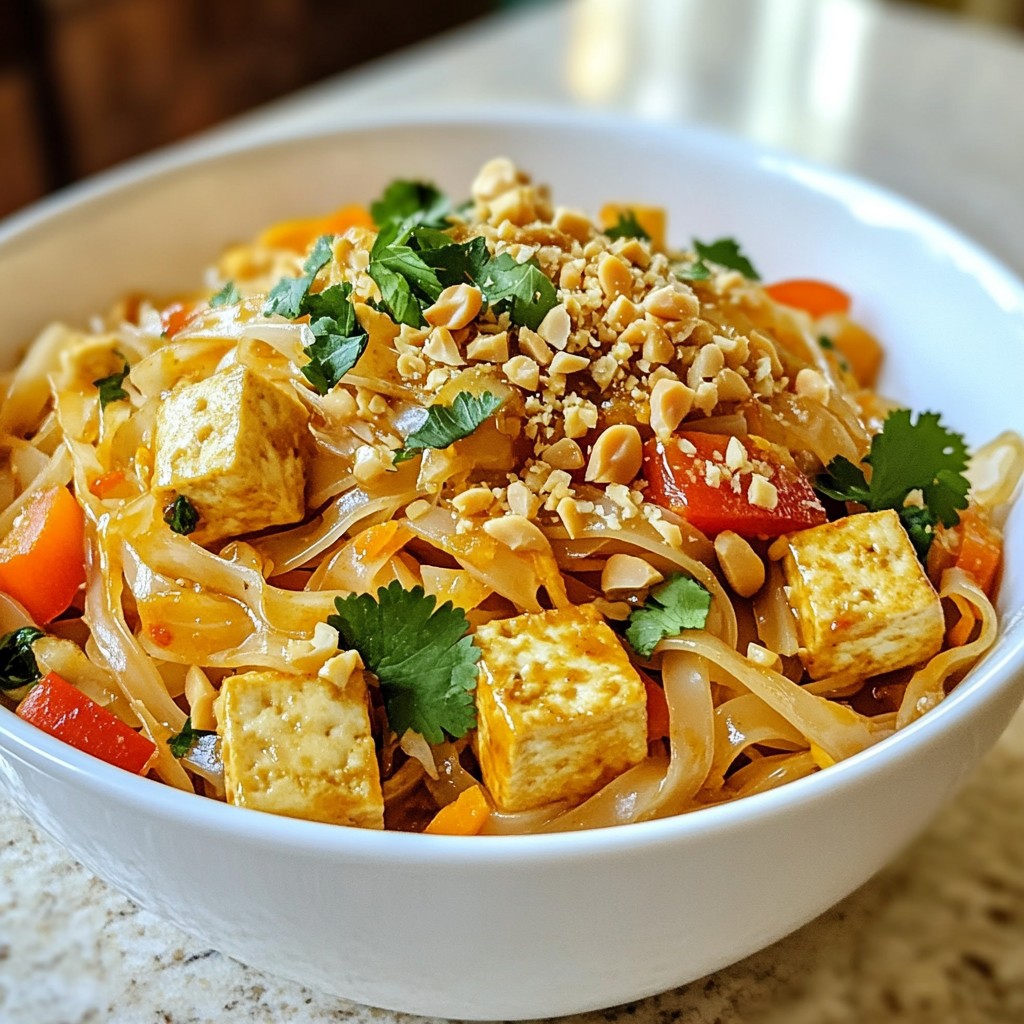
Vegetarian Pad Thai is a flavorful dish that's easy to make at home. If you crave the taste of this classic Thai meal without meat, you're in the right place. In this guide, I’ll share my simple recipe, covering everything from key ingredients to step-by-step instructions. Plus, I'll give you tips on making it your own! Ready to impress your taste buds? Let’s dive into this delicious vegetarian adventure!
Why I Love This Recipe
- Fresh and Flavorful: This Zesty Vegetarian Pad Thai is packed with vibrant vegetables and aromatic spices that create a fresh and delightful flavor profile, making it a favorite for any meal.
- Easy to Customize: The recipe allows for plenty of substitutions, whether you want to add more veggies or switch up the protein, making it versatile for different tastes.
- Quick to Prepare: With a total time of just 50 minutes, this dish is perfect for a weeknight dinner, allowing you to enjoy a wholesome meal without spending hours in the kitchen.
- Healthy and Wholesome: Loaded with fresh ingredients like tofu, bean sprouts, and colorful vegetables, this Pad Thai is not only delicious but also nutritious, making it a guilt-free indulgence.
Ingredients
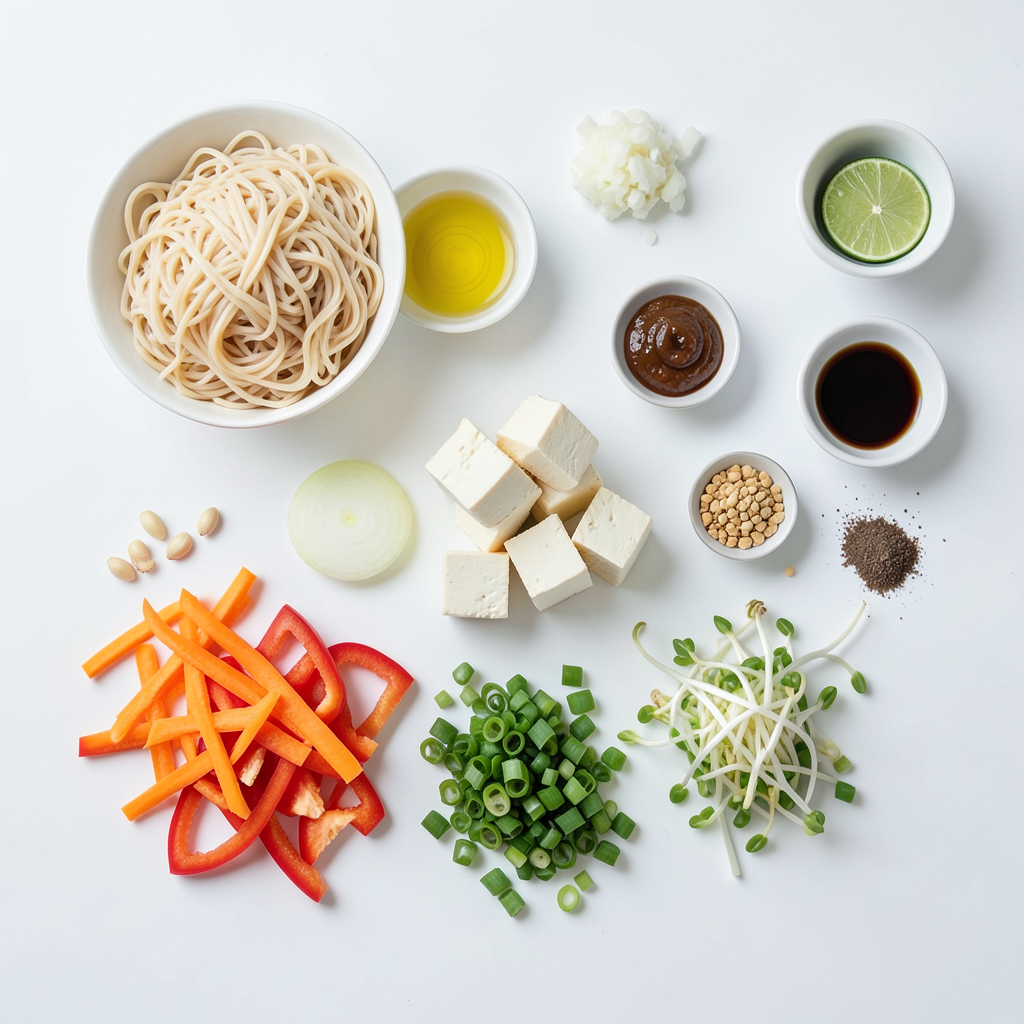
List of Main Ingredients
- 8 ounces rice noodles
- 2 tablespoons vegetable oil
- 3 cloves garlic, minced
- 1 small onion, thinly sliced
- 1 cup firm tofu, cubed
- 2 large carrots, julienned
- 1 red bell pepper, sliced
- 2 cups fresh bean sprouts
- 3 green onions, finely chopped
- ¼ cup crushed peanuts
- 2 tablespoons soy sauce
- 2 tablespoons tamarind paste
- 1 tablespoon brown sugar
- Juice of 1 lime
- Fresh cilantro leaves for garnish
- Salt and pepper to taste
This list has everything you need for a tasty Vegetarian Pad Thai. Rice noodles serve as the base. They soak up all the flavors. Tofu adds protein and texture. It really helps make this dish filling.
Use fresh vegetables for crunch and color. Carrots and bell peppers add sweetness. Bean sprouts give a nice crisp bite. The green onions add a hint of sharpness.
The sauces are key to rich flavor. Soy sauce brings saltiness. Tamarind paste adds tang. Brown sugar balances the taste. A squeeze of lime gives a bright finish.
Finally, don’t forget the garnishes! Crushed peanuts add crunch. Fresh cilantro adds a pop of green and freshness. Each ingredient works together to make this dish special. Get ready to enjoy a delightful meal!
Step-by-Step Instructions
Preparation of Rice Noodles
To start, soak 8 ounces of rice noodles in warm water. Let them sit for about 20-30 minutes. You want them to become al dente. This means they should be firm but not hard. A good soak will give you the right texture for your Pad Thai.
Cooking the Tofu
Next, heat 2 tablespoons of vegetable oil in a large skillet or wok over medium-high heat. Add 3 minced garlic cloves and 1 thinly sliced onion. Stir these for about 1 minute. You want them to smell great and soften a bit. Then, add 1 cup of cubed firm tofu. Cook this for about 5-7 minutes. You want the tofu to turn golden brown and get a little crispy. This will give your dish a nice texture.
Stir-Frying Vegetables and Noodles
Now, it’s time to add flavor. Toss in 1 cup of julienned carrots and 1 sliced red bell pepper. Stir-fry these for 3-4 minutes. You want them to stay tender but still crisp. Once they are ready, push the tofu and vegetables to one side of the skillet. Make space for the soaked noodles on the other side. Add the drained noodles gently into this space.
Preparing the Sauce
In a small bowl, mix 2 tablespoons of soy sauce, 2 tablespoons of tamarind paste, 1 tablespoon of brown sugar, and the juice of 1 lime. Whisk them until they blend well. Pour this sauce over the noodles. Toss everything together gently, making sure the noodles are well coated with the sauce.
Final Assembly
Finally, add 2 cups of fresh bean sprouts and 3 finely chopped green onions. Let everything cook for another 2-3 minutes. This will heat through the sprouts and onions. Taste your dish and adjust the seasoning with salt and pepper as needed. Serve the Pad Thai hot, and top it with crushed peanuts and fresh cilantro leaves for a tasty finish!
Tips & Tricks
Achieving Authentic Flavors
To make great Vegetarian Pad Thai, the balance of tamarind and soy sauce is key. Tamarind adds a sweet and tangy taste. Soy sauce brings umami and saltiness. Use equal parts of both for a well-rounded flavor.
For texture, cook your tofu until it's golden brown. This gives it a nice crust. It makes each bite satisfying. Don't rush this step. Let the tofu fry properly for perfect results.
Customizing Spice Levels
If you like heat, try adding chili flakes or sriracha. Start with a small amount, and taste as you go. You can always add more if needed.
You can also add garlic chives for extra flavor. They give a mild onion taste. This addition brightens the dish. Feel free to mix and match spices to find what you love!
Pro Tips
- Perfect Noodle Texture: Ensure the rice noodles are soaked just until al dente to prevent them from becoming mushy during stir-frying.
- Customize Your Veggies: Feel free to swap in your favorite vegetables or whatever you have on hand for a unique twist on this Pad Thai.
- Extra Crunch: For added texture, toast the crushed peanuts in a dry pan for a few minutes before sprinkling them on top.
- Flavor Boost: Marinate the tofu in a bit of soy sauce and lime juice before cooking to enhance its flavor throughout the dish.
Variations
Protein Alternatives
For a tasty twist on your vegetarian Pad Thai, try using different proteins. If you want a change from tofu, tempeh is a great choice. It has a firmer texture and absorbs flavors well. Seitan is another option. It has a chewy texture and adds a hearty feel to the dish. You can also mix in legumes like chickpeas. They add protein and a nice bite.
Vegetable Substitutions
Don't be afraid to swap out the vegetables in your Pad Thai! Broccoli and snap peas work well and add color. You can also use bell peppers, zucchini, or even mushrooms. Think about the season too. In summer, use fresh corn or tomatoes. In fall, add pumpkin or winter squash for a new flavor.
Gluten-Free Options
If you need a gluten-free version, there are simple changes you can make. Instead of rice noodles, try using rice paper noodles or zucchini noodles. Both options taste great and keep the dish light. For the sauce, look for gluten-free soy sauce or tamari. This way, you can enjoy your Pad Thai without worry.
Storage Info
Storing Leftovers
To store your vegetarian Pad Thai, let it cool first. Place it in an airtight container. This keeps the flavors fresh. You can store it in the fridge for up to three days. If you want to keep it longer, freeze it for up to a month. Just remember, freezing may change the texture slightly.
Reheating Instructions
When you're ready to eat your leftovers, you want to reheat them right. The best way is in a skillet. Heat it over medium heat with a splash of water or oil. Stir it often to keep the noodles from sticking. You can also use a microwave, but be careful. Heat it in short bursts and stir in between. This helps to keep the texture nice.
To keep the flavors strong, consider adding a bit more lime juice or soy sauce while reheating. This gives it a fresh taste, just like when you first made it. Enjoy your delicious vegetarian Pad Thai again!
FAQs
Can I make vegetarian Pad Thai ahead of time?
Yes, you can make vegetarian Pad Thai ahead of time. To do this, cook the noodles and veggies as per the recipe. Let them cool before storing. Use an airtight container for best results. You can keep it in the fridge for up to three days.
When you are ready to eat, reheat it gently in a skillet. Add a splash of water or soy sauce to help it warm up. This keeps the noodles from drying out.
What can I substitute for tamarind paste?
If you need a substitute for tamarind paste, use lime juice and brown sugar. Mix equal parts of both for a similar taste. You can also use a mix of soy sauce and a bit of vinegar. This will give your sauce a tangy flavor.
Another good option is using hoisin sauce. It adds sweetness and depth, but it is thicker. Adjust the amount to suit your taste.
Is Pad Thai typically gluten-free?
Traditional Pad Thai can be gluten-free, but check the ingredients. The rice noodles are usually gluten-free. However, some soy sauces contain gluten. Look for tamari or gluten-free soy sauce for your dish.
Many vegetarian versions use the same noodles and sauces. Just ensure all your ingredients are gluten-free.
How spicy is vegetarian Pad Thai?
Vegetarian Pad Thai can be mild or spicy, depending on your taste. The basic recipe is not very spicy. You can adjust the heat level easily.
For mild heat, skip the chili flakes. If you like it hotter, add crushed red pepper or sriracha. Start with a little and taste as you go. You can always add more, but you can't take it out!
In this post, I shared how to make delicious vegetarian Pad Thai. We discussed key ingredients like rice noodles and tofu. I provided step-by-step instructions for preparing each component. You learned tips on balancing flavors and customizing spice levels. Finally, I covered variations and storage methods for leftovers.
Making Pad Thai at home is rewarding and fun. Enjoy experimenting with your favorite ingredients for a meal that satisfies your taste.