
Looking for a quick, tasty meal? This Veggie Packed Chickpea Curry is your answer! With hearty chickpeas, fresh spinach, and rich coconut milk, it brings bold flavors to your table. Whether you're a busy parent or a student on the go, this dish is simple to whip up and packed with nutrients. Plus, I’ll share tips to make it your own. Let’s dive in and start cooking!
Why I Love This Recipe
- Nutritious and Wholesome: This chickpea curry is packed with a variety of vegetables and protein-rich chickpeas, making it a healthy choice for any meal.
- Quick and Easy: With a total cooking time of just 30 minutes, this recipe is perfect for busy weeknights when you need a delicious meal in a hurry.
- Flavorful Spices: The combination of curry powder, turmeric, and cumin infuses the dish with aromatic flavors that will tantalize your taste buds.
- Versatile Serving Options: This curry pairs beautifully with rice or quinoa, allowing you to customize your meal to your liking.
Ingredients
Main Ingredients
- 1 can (15 oz) chickpeas, drained and rinsed
- 1 tablespoon coconut oil
- 1 medium onion, finely chopped
- 3 cloves garlic, minced
- 1 tablespoon fresh ginger, grated
- 1 bell pepper (any color), diced into bite-sized pieces
- 1 medium zucchini, diced
- 1 medium carrot, diced
- 1 cup fresh spinach, roughly chopped
- 1 can (14 oz) full-fat coconut milk
- 1 can (14 oz) diced tomatoes, with juices
- 2 tablespoons curry powder
- 1 teaspoon ground turmeric
- 1 teaspoon ground cumin
- Salt and freshly ground black pepper, to taste
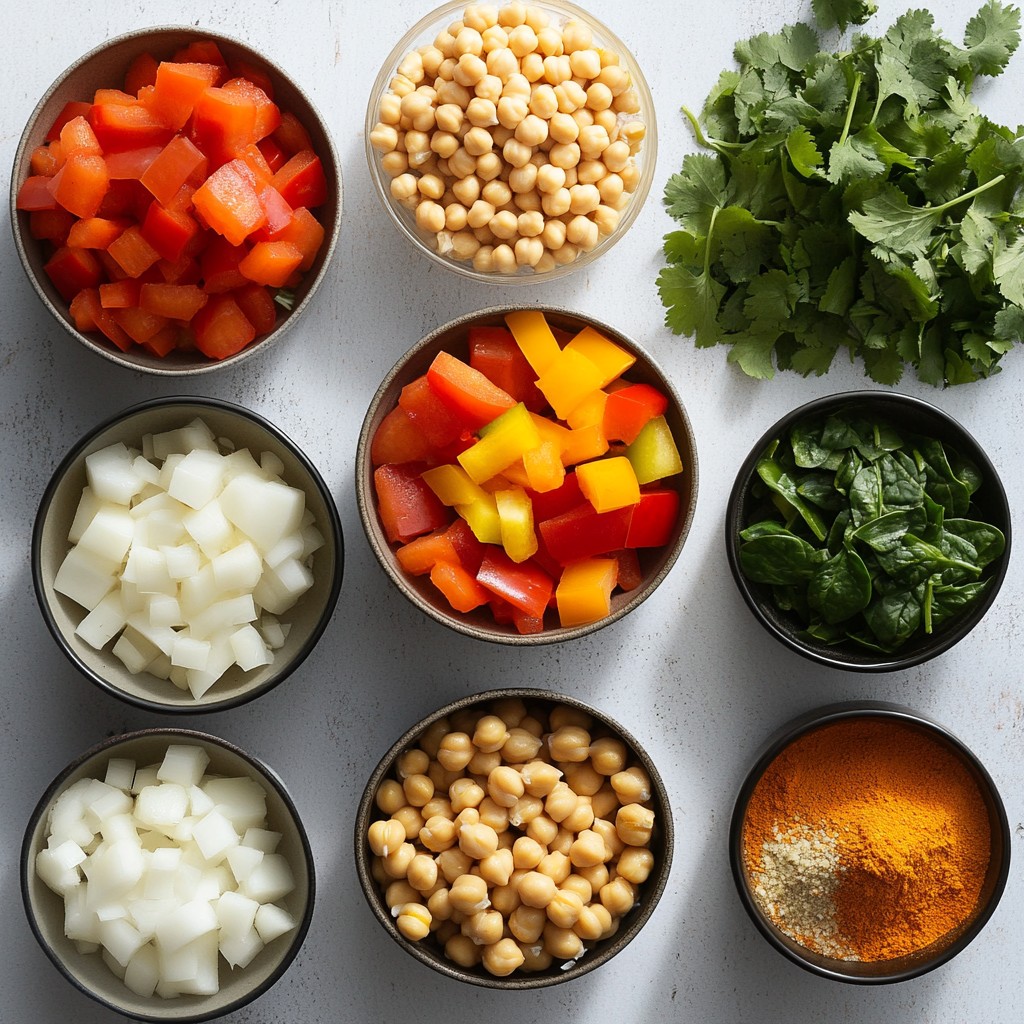
Chickpeas are the star of this dish. They add protein and fiber, making the meal filling. Spinach brings a nice touch of green and healthy vitamins. The fresh ginger and garlic give the dish a warm, inviting aroma. You can use any bell pepper color you like. Zucchini and carrots add crunch and sweetness. Coconut milk makes the curry creamy and rich. The spices bring all the flavors together.
Optional Garnishes
- Fresh cilantro, chopped, for garnish
- Cooked rice or quinoa, for serving
Garnishing with fresh cilantro adds a pop of color and taste. You can serve the curry with rice or quinoa for a complete meal. These sides soak up the curry sauce, making each bite delightful. Try different garnishes, like lime wedges or yogurt, to mix things up.
Step-by-Step Instructions
Preparation Steps
1. Heat the coconut oil in a large pot over medium heat until it shimmers.
2. Add the finely chopped onion to the pot. Sauté for 3-4 minutes until soft.
3. Stir in the minced garlic and grated ginger. Cook for another minute until fragrant.
4. Now, add the diced bell pepper, zucchini, and carrot. Cook for 5-7 minutes. Stir occasionally until they start to soften.
Cooking the Curry
5. Sprinkle the curry powder, ground turmeric, and ground cumin over the veggies. Stir well. Toast the spices for 1-2 minutes to enhance their flavors.
6. Pour in the diced tomatoes with their juices and the full-fat coconut milk. Stir to mix everything together.
7. Gently fold in the rinsed chickpeas. Bring the mixture to a gentle simmer. Let it cook for 10-15 minutes. Stir occasionally so the flavors meld.
Final Touches
8. Just before serving, add the roughly chopped spinach to the pot. Stir until the spinach is wilted and bright green.
9. Taste your curry and adjust seasoning with salt and freshly ground black pepper as desired.
For a delightful presentation, serve the curry over fluffy rice or quinoa. Garnish with freshly chopped cilantro for extra flavor. Enjoy your comforting meal!
Tips & Tricks
How to Perfect the Curry
To make your curry just right, focus on spice levels. Start with a mild curry powder. If you want more heat, add chili flakes or a hot sauce. Taste the curry as it cooks. This way, you can adjust the spices to your liking.
Cooking time is also key. Sauté your onions until they turn soft. This step adds sweetness. When you add the veggies, give them enough time to soften but not mushy. Let the curry simmer for about 10-15 minutes. This helps the flavors blend well.
Equipment Recommendations
For the best results, use a large pot. A heavy-bottomed pot distributes heat evenly. This helps prevent burning. A non-stick pan works too if that's what you have.
You will need a few basic utensils. A sharp knife makes chopping easy. A wooden spoon helps mix the ingredients well. A measuring spoon is great for precise spice measurements. These tools make your cooking smoother and more enjoyable.
Pro Tips
- Use Fresh Spices: Always opt for fresh spices when possible. This will enhance the flavor of your curry significantly. If your spices are old, consider replacing them for a brighter taste.
- Customize Your Veggies: Feel free to add other vegetables like cauliflower, peas, or sweet potatoes. This recipe is versatile, and using seasonal vegetables can elevate the dish.
- Adjust the Creaminess: For a creamier texture, blend a portion of the chickpeas and coconut milk before adding them to the pot. This will create a velvety sauce that envelops the veggies beautifully.
- Make It Spicy: If you like heat, add chopped fresh chili peppers or a pinch of cayenne pepper when cooking the onion. This will give your curry a nice kick!
Variations
Ingredient Swaps
You can change up the veggies in this curry. Try adding sweet potatoes or cauliflower for a new twist. Broccoli or peas work well, too. These swaps keep your meal fresh and exciting.
For beans, chickpeas are great, but you can use black beans or kidney beans instead. Lentils are also a fantastic choice. They add protein and change the texture nicely.
Dietary Modifications
If you're gluten-free, this curry is already safe! All the ingredients are naturally gluten-free. Just make sure your spices do not contain gluten.
For vegan protein, consider adding tofu or tempeh. Both options are protein-rich and soak up flavors well. You can also mix in a scoop of nut butter for added creaminess and taste.
Storage Info
How to Store Leftovers
You can store your veggie packed chickpea curry in airtight containers. Glass containers work best, but plastic ones are fine too. Make sure to let the curry cool down before sealing. The curry stays fresh for up to five days in the fridge. If you want to keep it longer, consider freezing it.
Reheating Tips
To reheat the curry, you have several options. You can use a microwave, stovetop, or oven. If using the microwave, place the curry in a bowl and cover it. Heat in short bursts and stir in between. On the stovetop, warm it over low heat, stirring often. If you use the oven, cover the dish with foil to keep it moist. Always check the temperature before serving. Avoid overcooking to keep the veggies bright and tender.
FAQs
What can I serve with Veggie Packed Chickpea Curry?
You can serve this curry with several tasty sides. Here are some great options:
- Cooked rice: White or brown rice works well.
- Quinoa: This adds protein and a nice texture.
- Naan: Soft, warm naan is perfect for dipping.
These sides add balance to the meal and soak up the curry's rich sauce.
Can I freeze this chickpea curry?
Yes, you can freeze this chickpea curry. Here is how to do it right:
- Let the curry cool first.
- Use an airtight container or freezer bag.
- Label with the date and contents.
When you want to eat it, thaw it in the fridge overnight. Reheat it on the stove or microwave until hot.
How do I make the curry spicier?
If you like heat, here are some easy ways to spice it up:
- Add diced fresh chili peppers during cooking.
- Stir in red pepper flakes for a kick.
- Use spicy curry powder instead of mild.
Start with a small amount and taste as you go. You want it flavorful, not overpowering!
This blog post showed you how to make a tasty chickpea curry. We covered key ingredients like chickpeas, spinach, and spices. I shared step-by-step instructions for preparation and cooking. You learned tips for perfecting your curry and ways to change up the recipe. Plus, you gained insight on storing leftovers and reheating them safely.
In closing, this chickpea curry is easy to master. With practice, you can create your version that your family will love. Enjoy cooking and happy eating!